


Is Tarpon Springs, United States Safe? A 2026 Travel Safety Guide
The most-Greek town in America, the Sponge Docks, the Tampa Bay area context, and the realistic risks.

Tarpon Springs is a small town on Florida's Gulf Coast — the highest concentration of Greek-Americans in the US (~10% of population). The Sponge Docks (a working sponge-fishing port + restored 1900s Greek immigrant district) are the visitor draw. Crime against tourists is essentially nil. The realistic concerns are the standard Florida hurricane awareness (June-November), summer heat (90°F+), and the limited public transport (you'll want a car).
Tarpon Springs is part of the Tampa-St Petersburg metro — pair with our broader Tampa or Clearwater guides. Anchors: the Sponge Docks (Dodecanese Boulevard), St Nicholas Greek Orthodox Cathedral, the Spongeorama museum, the Pinellas Trail (cycling), Anclote River, and Howard Park beach.
The history is what makes the place: in 1905, sponge-merchant John Cocoris brought Greek divers from Kalymnos, Hydra and the Dodecanese to harvest the natural sponge beds off the Florida Gulf coast. By 1908 the industry was producing more sponges than anywhere else in the world, and the immigrant divers stayed — building churches, opening bakeries, marrying into the local population. A century later the diving boats are still working (although smaller — synthetic sponges destroyed the industry's volume in the 1940s), and the Dodecanese Boulevard waterfront is a living Greek-American district unlike anywhere else in the United States. The Anclote River and Spring Bayou frame the town; the Pinellas Trail (a 37-mile rail-trail running the length of the county) passes through the centre. Howard Park's causeway beach extends out into Anclote Sound.
| Night safety | 72/100 |
|---|---|
| Scam / petty-crime risk | Low |
| Violent crime (tourists) | Low |
| Safer neighbourhoods | Sponge Docks, Greek Town, Howard Park |
| Data sources cited | 3 |
| Last verified |
What the score means — 86/100
- Personal safety (88) — among the safer Tampa Bay communities.
- Air quality (84) — Gulf coastal; clean.
- Healthcare (82) — Florida Hospital North Pinellas; major hospitals 30 min south in Clearwater + Tampa.
- Transport (76) — car-dependent; bus + Pinellas Trail.
Tarpon Springs in the Tampa Bay context
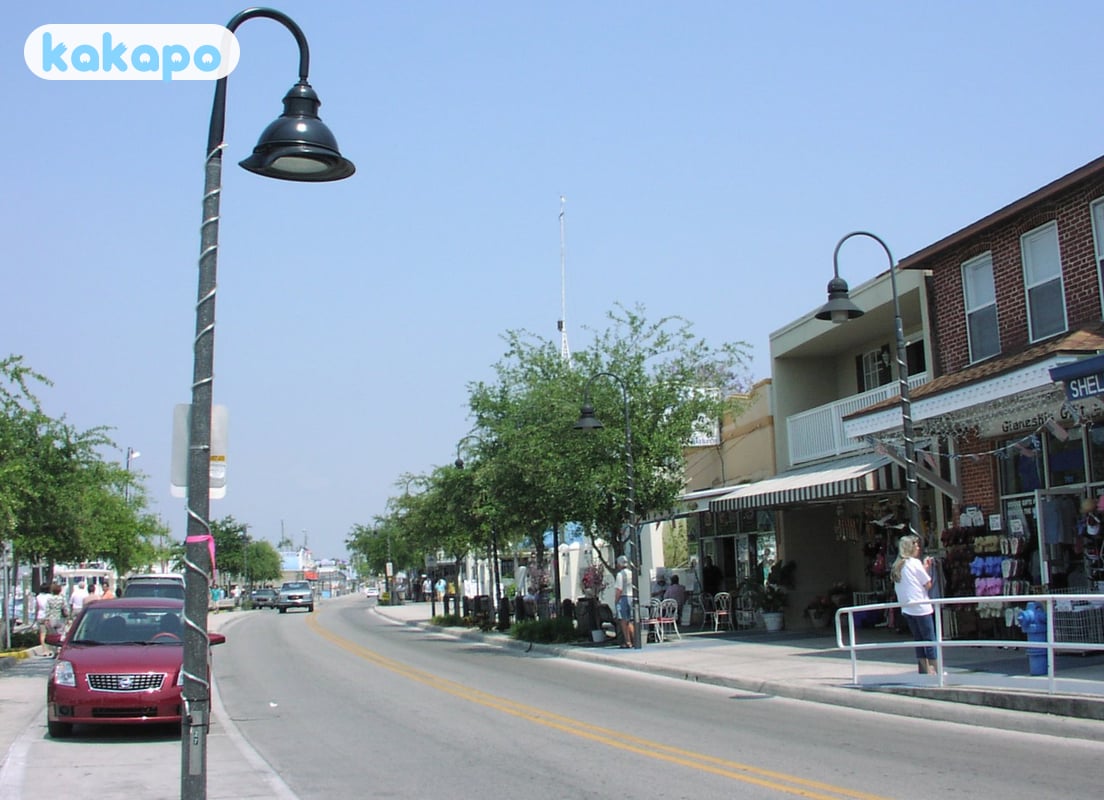
- Town size: ~26,000.
- Greek heritage: 1900s Greek sponge-divers + their descendants. Greek restaurants + bakeries throughout the Sponge Docks.
- Pair with our Tampa + Clearwater guides: for the broader Tampa Bay context.
- Day-trip from Tampa: 50 km / 60 min north.
Hurricane season
- Season: June-November.
- Recent direct + near-miss hits: Helene + Milton (2024) caused major Tampa Bay flooding + damage; Idalia (2023).
- If a hurricane approaches: heed evacuation orders.
- Travel insurance: confirm hurricane-cancellation cover.
Transport — car, the airport
- Car: the standard. US-19 + US-Alt-19 main roads.
- PSTA bus: routes 19 + 66 + 67 connect to St Petersburg + Clearwater.
- Tampa International Airport (TPA): 50 km south. ~50 min by car.
- St Pete-Clearwater (PIE): 30 km south.
Money + cost
- Currency: USD.
- Cards: tap-to-pay universal.
- Tipping: 18-22% restaurants.
- Cost: mid-range. Hotels $100-250.
Districts — Sponge Docks, Greek Town, Anclote River, Howard Park
- Sponge Docks (Dodecanese Boulevard) — the working sponge-fishing port and the heart of Greek-American Tarpon Springs. Sponge boats, sponge shops, Greek bakeries (Hellas, Mr Souvlaki), the Spongeorama museum. Walkable, busy by day, mostly quiet by 22:00. The single anchor for any visit.
- St Nicholas Greek Orthodox Cathedral — built 1943 on Pinellas Avenue, the spiritual centre of the Greek-American community. Modest dress required (no shorts above the knee). The annual Epiphany cross-diving ceremony (January 6) draws thousands.
- Spring Bayou — small spring-fed bayou immediately south of the Cathedral, the site of the Epiphany cross-throwing. Wooded park around it. Alligators are real here — keep clear of the water's edge after dark.
- Greek heritage downtown (Pinellas Avenue) — older commercial strip with the historic city hall, the Heritage Museum, and a parade of antique shops, Greek delis and bakeries that aren't on the more touristy Sponge Docks.
- Anclote River — the river the sponge boats come up from the Gulf, with riverside parks (Sunset Beach, Fred Howard Park) and the Anclote Key state park accessible by boat from the Sponge Docks (35-min ferry).
- Howard Park — a causeway beach extending out into Anclote Sound, free entry, family-quiet, picnic shelters. Drive along the causeway to reach the actual beach island.
- Pinellas Trail — the 37-mile rail-trail running from Tarpon Springs south through Dunedin, Clearwater and St Petersburg. Excellent cycling spine; rentals from Suncoast Bicycles in town.
- Anclote Key Preserve State Park — barrier island offshore, accessible only by boat (ferry from Sponge Docks). Wild beach, lighthouse, no facilities. Bring water.
- Tampa Bay context — Tarpon Springs is in northern Pinellas County, about 60 minutes north of St Petersburg, 60 minutes north-west of Tampa, and 45 minutes north of Clearwater Beach. Most visitors do it as a day-trip from Clearwater or Tampa rather than basing here.
If it's your first time in Tarpon Springs
- Arrival: Tampa International (TPA) is 50 km south — ~50 minutes by car, Uber/Lyft $50-75. St Pete-Clearwater (PIE) is 30 km south, smaller airport, cheaper rental cars. Orlando MCO is 2 hours east — only sensible if you're combining theme parks with the Gulf.
- Where to stay: limited boutique inventory — Tarpon Shores Inn, the Best Western on US-19, a few B&Bs in the older residential blocks. $100-250/night. Most visitors actually base in Clearwater or Tampa and day-trip up.
- Rental car is mandatory: PSTA buses exist but headways are 60+ minutes. The Pinellas Trail is fine for cycling but doesn't get you to the airport.
- Day 1 plan: morning at the Sponge Docks (Spongeorama museum, sponge-diving boat demonstration, walk Dodecanese Boulevard), Greek lunch (Hellas, Mama's Greek Cuisine, Mr Souvlaki), afternoon at St Nicholas Cathedral and Spring Bayou, late afternoon at Howard Park beach for the sunset.
- Day 2 — if you have it: Anclote Key ferry (3-hour trip on the wild barrier island), or cycle south on the Pinellas Trail to Dunedin (15 km — Caladesi Island state park is then accessible by ferry from Dunedin).
- Hurricane awareness (June-November): travel insurance with named-storm cover essential. Helene and Milton (2024) caused major Tampa Bay flooding and damage; Idalia (2023) was a close call. Book any June-November trip with cancellation cover that triggers on a National Hurricane Center watch/warning (not just a forecast).
- Greek food expectations: this is genuine Greek-American food — gyros, souvlaki, spanakopita, fresh baklava, Greek salad with feta blocks rather than crumbles. Some of it is properly traditional; some is Americanised. Hellas is the most-loved long-running institution.
- Buying sponges: real natural sponges are still sold on the Docks, but cheap imported sponges get passed off too. Buy at named, family-run shops (Spongeorama, Old Sponge Exchange) and expect to pay $8-30 for a real Florida sea sponge.
- Common rookie mistakes: visiting in August (heat + hurricane peak); not booking the Anclote Key ferry in advance; expecting Sponge Docks to be lively past 21:00 (it's not); ignoring alligator warnings at Spring Bayou (real, ambush from water edges, especially after dark).
- Best season: November-April. Peak heat and hurricane risk: July-September.
Practical info — emergency numbers
- Emergency: 911.
- Tarpon Springs Police (non-emergency): +1 727 938 2849.
- AdventHealth North Pinellas: +1 727 942 5000.
Bring: sunscreen + light clothing, a US SIM/eSIM, contactless card, hurricane-aware travel insurance (June-November), comfortable walking shoes for the Sponge Docks. Pair with our Tampa + Clearwater guides.
Frequently asked questions
Is Tarpon Springs, United States safe to visit in 2026?
Yes — Tarpon Springs scores 86/100 here and is among the safer Tampa Bay communities. The town is small (~26,000), tourist-friendly, and the Sponge Docks (Dodecanese Boulevard — a working sponge-fishing port plus the restored 1900s Greek immigrant district) are heavily policed during the day. Crime against visitors is essentially nil. The realistic concerns are the standard Florida set: hurricane awareness (June-November, with Helene and Milton 2024 causing major Tampa Bay flooding), summer heat (90°F+ with humidity that surprises non-Floridians), and the limited public transport that makes a car effectively mandatory.
Is Tarpon Springs safe at night?
Yes — the Sponge Docks strip and the historic downtown stay safe after dark with the standard Florida small-town caveats: the strip mostly closes by 22:00 (a few bars run later), the surrounding residential streets are quiet rather than dangerous, and the main risks are practical (DUI checkpoints on weekend nights on US-19 and US-Alt-19, alligator awareness if you walk near Spring Bayou after dark — they're real and ambush from water edges). Solo travellers including women are routinely comfortable on the Docks and downtown at evening hours. Use Uber or Lyft rather than driving after any drinking — Florida DUI penalties are harsh.
What scam should I watch for in Tarpon Springs?
There's no Tarpon-specific scam — the Sponge Docks economy is well-regulated and the town's small size keeps the tourist-trap pressure low. The Tampa Bay-wide patterns to watch are timeshare-presentation invitations on Clearwater Beach (60 min south) and the standard Florida hurricane-season insurance gotcha: book any June-November trip with travel insurance that includes hurricane-cancellation cover, because resort policies often refuse refunds unless the National Hurricane Center has issued a specific watch/warning. The 'sponge' you buy on the Docks is mostly real (this is genuinely one of the few US sponge-fishing operations left) but some cheap imported sponges get passed off — buy at the named shops (Spongeorama-affiliated, the Old Sponge Exchange) for the authentic article.
Can you drink the tap water in Tarpon Springs?
Yes — Pinellas County municipal water including Tarpon Springs meets EPA Safe Drinking Water Act standards and is tested constantly; the annual Consumer Confidence Report is published online. Florida tap water is heavily chlorinated and tastes that way to non-locals; carry a refillable bottle and refill from filtered dispensers at hotels if you prefer. After major hurricanes (Helene/Milton-scale), boil-water notices occasionally apply for 24-72 hours while utilities verify pressure and contamination — heed any local advisory.
What makes Tarpon Springs different from other Tampa Bay beach towns?
Tarpon Springs is the most Greek-American place in the United States — roughly 10% of the population traces ancestry to the early-1900s sponge-divers from Kalymnos, Hydra and the Dodecanese who came for the Gulf sponge beds. The result is a working Sponge Docks port (still operational; the boats unload real sponges daily), genuinely Greek bakeries and restaurants along Dodecanese Boulevard (Hellas Restaurant and Bakery, Mama's Greek Cuisine, Mr Souvlaki), the St Nicholas Greek Orthodox Cathedral (built 1943, the spiritual centre of the community — modest dress to enter, no shorts above the knee), the annual Epiphany (January 6) cross-diving ceremony that draws thousands, and the Spongeorama museum that explains the industry. Beyond the Greek anchor, Tarpon Springs has the Pinellas Trail (37-mile rail-trail for cycling), Anclote River boat-tours to Anclote Key, Howard Park beach (causeway beach, free, family-quiet), and easy day-trips to the Weeki Wachee mermaid show (45 min north) or to the bigger Tampa Bay anchors. Tampa International (TPA) is 50 km south (~50 min by car); St Pete-Clearwater (PIE) is 30 km south. Pair with our Tampa and Clearwater guides; visit June-October with hurricane-aware travel insurance.
Sources
Run a business in Tarpon Springs?
Show visitors your Tarpon Springs business is a safe choice. The free Verified by Kakapo badge puts Tarpon Springs's live safety score on your website, links back to your verified page, and updates itself. No cost.
Get the free badge →