


Is Santa Teresa Safe at Night? Rio 2026 Guide
The bonde tram, the walk-down to Lapa, the Largo do Guimarães bars — Rio's bohemian hilltop neighbourhood after dark, the honest version.

Santa Teresa is Rio's bohemian hillside neighbourhood — cobbled streets, the yellow bonde tram, colonial mansions, the Escadaria Selarón staircase at its lower edge, and one of the city's best concentrations of small restaurants. After dark it's also a neighbourhood where local advice consistently warns visitors against specific streets, specific walking routes, and specific times.
The geography is unusual: Santa Teresa sits on a forested hill rising directly above central Rio, surrounded by favelas on three sides (Morro dos Prazeres, Morro do Fogueteiro, Coroa). The neighbourhood proper has gentrified hotels, art galleries and restaurants; 200 metres in the wrong direction puts you on a track into a favela. Rio's Polícia Civil and the Polícia Militar UPP (Pacifying Police Units) maintain a presence in the favelas around Santa Teresa, but the security situation has fluctuated through the 2020s; in early 2026 the UPPs in the immediate Santa Teresa surrounds are operational but not at the strength they were in 2014-2016.
The honest summary: Santa Teresa for dinner at Largo do Guimarães is genuinely worth doing; Santa Teresa as a self-guided hilltop bar crawl walking back to Lapa after midnight is the scenario where solo travellers regularly get mugged. This guide separates the two.
| Night safety | 50/100 |
|---|---|
| Scam / petty-crime risk | High |
| Violent crime (tourists) | Medium |
| Most common scams | muggings on the descent to Lapa via Escadaria Selarón; muggings on Ladeira de Santa Teresa; muggings at knifepoint or with a fake-gun threat |
| Safer neighbourhoods | Largo do Guimarães, Santa Teresa |
| Data sources cited | 4 |
| Last verified |
Largo do Guimarães — the safe bohemian dinner
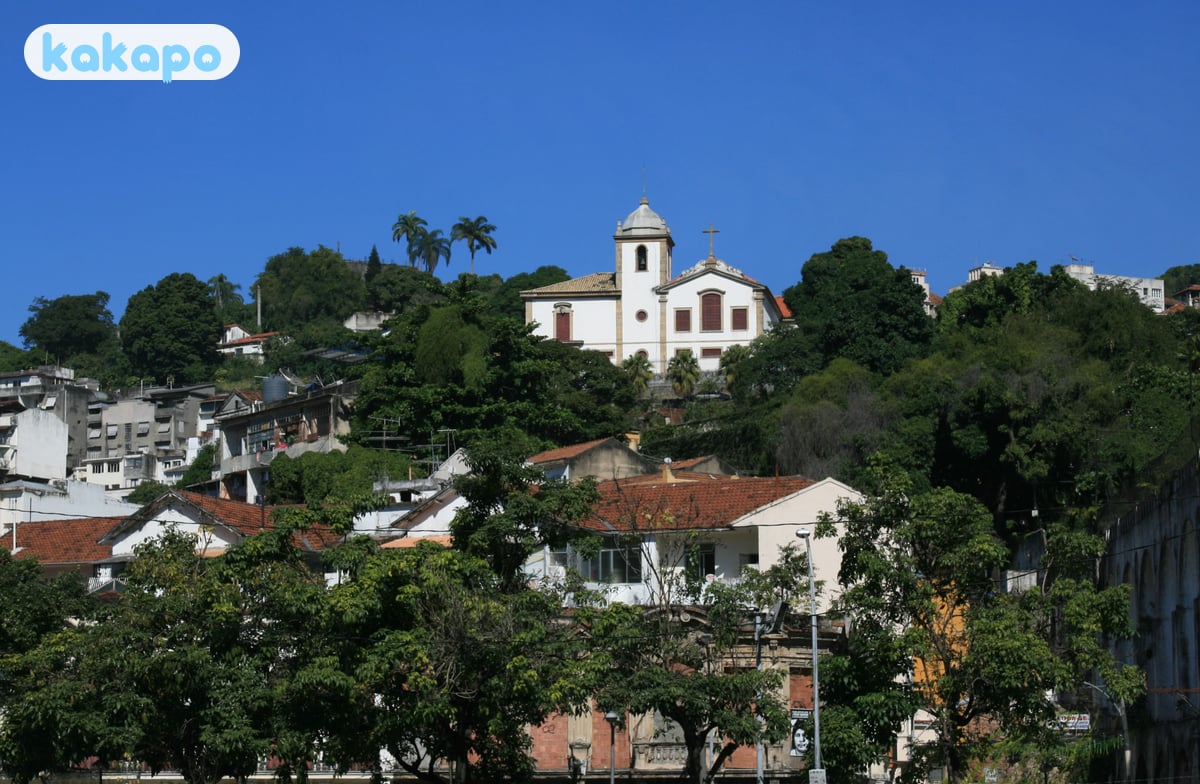
- What it is: Santa Teresa's central square, with the bonde stop, Bar do Mineiro (the area's signature feijoada institution since 1996), Espírito Santa, Aprazível (the famous panoramic restaurant) within walking distance.
- Daytime and dinner: heavily walked, well-lit, mixed crowd of locals and visitors. Safe.
- Getting there: Uber/99 from anywhere in Rio Sul (Copacabana, Ipanema, Botafogo) — R$25-40. From Centro R$15-25.
- Bonde (yellow tram): from Carioca Station (Centro) up to Largo do Guimarães and on to Dois Irmãos. Operates 07:00-22:30. R$20 single. Stunning ride; standing on the side-running boards is the iconic photo. Safe during operating hours.
- Going home from dinner: Uber/99 from Largo do Guimarães. Avoid the temptation to walk down to Lapa even though it's only 1.5km — the descent route (Rua Almirante Alexandrino → Ladeira de Santa Teresa → Escadaria Selarón) is the single most-reported tourist mugging route in central Rio.
- Aprazível (Rua Aprazível 62) — the panoramic restaurant. Stunning views; the road up is steep, narrow and quiet. Always Uber up and Uber back; do not walk this stretch.
The walk down to Lapa — why it's the dangerous route
- The descent: Santa Teresa's southern edge drops steeply to Lapa (Rio's main nightlife district) via the cobbled Ladeira de Santa Teresa or via the Escadaria Selarón steps. Both routes are 600-800m of unlit, sparsely-walked terrain.
- The pattern: muggers wait at the chokepoints — the upper Selarón steps, the bend in Ladeira de Santa Teresa near the Convento de Santa Teresa, the Travessa do Mosquéia. They approach individuals or pairs, demand phone and wallet at knifepoint or with a fake-gun threat, and disappear into the surrounding favela.
- What's been done: increased Polícia Militar patrols on the Selarón steps during peak tourist hours (typically 09:00-17:00); after dark the police presence drops sharply.
- Reality in 2026: the Escadaria Selarón is fully safe to walk up during daylight (and it's one of Rio's most-photographed sights); after dark, every Rio safety guide written by anyone with local experience says the same thing: do not walk this route.
- Alternative: Uber/99 from Largo do Guimarães directly to your Lapa or Centro destination. R$10-15.
The bonde (yellow tram) — practical use
- Route: Largo da Carioca (Centro) → Carioca → Curvelo → Largo do Guimarães → Dois Irmãos (the upper terminus).
- Hours: 07:00-22:30, every 20-30 minutes during the day, every 40-60 minutes after 19:00.
- Safety: comfortably safe during operating hours. The tram has a conductor and a guard; stops are at well-lit small squares; passengers are a mix of residents, workers and tourists.
- 2011 crash: an out-of-control bonde derailed and killed 6 people; the system was rebuilt and modernised, reopened 2015. Current safety record is good.
- Photo opportunity vs. safety: standing on the running boards is iconic but holding the handrail with both hands is mandatory.
- After 22:30: tram closed; Uber/99 from Largo do Guimarães or any hilltop bar.
The favela borders — which streets to skip
- North side: Morro do Fogueteiro, accessible via Rua Heitor Beltrão. Do not walk in.
- West side: Morro dos Prazeres — one of Rio's larger favelas, accessible via several streets off Rua Almirante Alexandrino. UPP-pacified intermittently through the 2020s; current status fluctuates. Tour-only.
- South-west: Morro da Coroa — smaller. Tour-only if at all.
- South-east: drops to Lapa via the Selarón steps and Ladeira route described above.
- The general rule: stay on the central spine — Rua Almirante Alexandrino, the streets around Largo do Guimarães, Rua Paschoal Carlos Magno. Do not turn off into side streets that visibly run uphill into denser informal settlement.
- Favela tours: legitimate operators (e.g. Favela Inc., Rocinha Original Tour for Rocinha rather than Santa Teresa) operate but the political situation in 2026 is more sensitive than in the 2010s; check current FCDO and US State Dept advice before booking.
Hotels in Santa Teresa
- Hotel Santa Teresa (Rua Almirante Alexandrino 660) — the area's flagship; gated entrance, on-site security. Excellent.
- Mama Ruisa (Rua Santa Cristina 132) — a smaller boutique; well-rated.
- Casa Áurea (Rua Áurea 80) — pousada-style.
- Where not to stay: ultra-budget hostels on the streets running steeply uphill off Rua Almirante Alexandrino; the location may be cheap but the walk back at night from a Largo do Guimarães dinner is not the experience you want.
- Should you base yourself in Santa Teresa?: for atmosphere, yes — but the dependency on Uber for every evening trip out makes Botafogo, Ipanema or Copacabana more practical bases. Santa Teresa is best visited for a dinner and a daytime, not as a permanent base unless you specifically want the bohemian vibe.
Practical safety notes
- Emergency: 190 (Polícia Militar), 192 (medical), 193 (fire). 9-1-1 calls from a mobile route to the local emergency centre.
- Tourist police (DEAT): 24-hour tourist police office in Leblon, Avenida Afrânio de Melo Franco 159; +55 21 2332-2924. English-speaking officers.
- What to carry: minimum cash (R$100-200), one card, a copy (photo on phone) of your passport. Leave the real passport in the hotel safe.
- If mugged: comply immediately. Rio muggings are typically armed and brief; resistance escalates the risk dramatically. The Polícia Militar reports almost zero injuries in straightforward tourist muggings where the victim complies.
- The 2026 context: Rio's overall street-crime rate has fluctuated through the year; the city's tourism-area homicide rate remains low but property-crime (phone-snatch, mugging) is elevated vs. the 2014-2016 baseline. Carry-the-minimum is the right strategy.
Frequently asked questions
Is Santa Teresa Rio safe at night in 2026?
Yes for Largo do Guimarães and the central bars/restaurants. The dangerous part is the walk down to Lapa via the Escadaria Selarón or Ladeira de Santa Teresa — that descent is the single most-reported tourist mugging route in central Rio. Always Uber/99 down rather than walking. Largo do Guimarães itself for dinner is heavily walked and well-lit.
Is the bonde tram safe?
Yes during operating hours (07:00-22:30). Conductor and guard on board; stops at well-lit central squares; mixed crowd of residents and visitors. Modernised after the 2011 crash. After 22:30 the service closes — Uber from Largo do Guimarães is the alternative.
Can you walk from Santa Teresa to Lapa at night?
No. The descent via Escadaria Selarón or Ladeira de Santa Teresa is the most-reported tourist mugging route in central Rio. Even though it's only 600-800m and looks fine on the map, the route is unlit, sparsely walked at night, and bordered by favelas on both sides. Always Uber/99 (R$10-15).
Is Santa Teresa safe for solo female travellers?
For Largo do Guimarães dinner, yes. The catch is door-to-door Uber transport rather than walking; solo women should not walk back to a hotel via the descent routes at night. Solo female dining at Bar do Mineiro, Espírito Santa or Aprazível is routine and uneventful.
What should I avoid in Santa Teresa?
Walking down to Lapa or Centro at night; turning off the central spine streets (Rua Almirante Alexandrino, the area around Largo do Guimarães) into side streets that run uphill into favelas; carrying valuable items, jewellery, expensive watches. The Escadaria Selarón is one of Rio's signature photo spots during daylight but not a destination at night.
Is the Escadaria Selarón safe?
Daytime yes — heavily walked, with police patrols during peak tourist hours. After dark it's the upper end of the Santa Teresa-to-Lapa mugging corridor and consistently flagged by local guides as not safe. Visit between 10:00 and 16:00.
Where should I stay if I want to be in Santa Teresa?
Hotel Santa Teresa (Rua Almirante Alexandrino 660) is the area's gated boutique flagship with on-site security; Mama Ruisa and Casa Áurea are smaller alternatives. Avoid ultra-budget hostels on streets running steeply uphill off the main spine — the cheap room costs you the Uber-only evening transport equation.
Sources
Run a business in Santa Teresa, Rio de Janeiro?
Show visitors your Santa Teresa, Rio de Janeiro business is a safe choice. The free Verified by Kakapo badge puts Santa Teresa, Rio de Janeiro's live safety score on your website, links back to your verified page, and updates itself. No cost.
Get the free badge →