


Is Copacabana Safe at Night? Rio 2026 Guide
Avenida Atlântica, the Posto numbers, the kiosks (Quiosques), the beach-after-dark phone-snatch, and the side streets that briefly stop being safe.

Copacabana's iconic mosaic promenade along Avenida Atlântica is among the most-walked stretches of tourist Rio after dark — and, contrary to its lingering 1980s/90s reputation, it's safer than many travellers expect. The 4-kilometre beachfront from Leme (north) to Posto 6 (south) stays busy with joggers, families, late diners and tourist couples until midnight on most nights. The Polícia Militar tourist-police presence is permanent and visible; CCTV is comprehensive on the promenade; the high-end hotels (Copacabana Palace, Hilton, Pestana, Hotel Fasano just south in Ipanema) anchor the strip with their own security perimeters.
The catches are specific and worth naming. The sand strip itself after dark is the documented phone-snatch zone — bag-snatch teams chase late-night joggers and target couples seated at the beachfront kiosks ("Quiosques"). The side streets one block back from the beach (especially the lower end of Rua Barata Ribeiro and the streets near Posto 1 in Leme) get rougher after midnight. And the northern end (Posto 1 / Leme) and the underpass to the Leme bairro have a different feel than the central Posto 3-5 stretch.
This guide is the specific-street, specific-time, specific-precaution Copacabana brief.
| Night safety | 55/100 |
|---|---|
| Scam / petty-crime risk | High |
| Violent crime (tourists) | Medium |
| Most common scams | phone-snatch teams on the sand strip after dark; unmarked white-cab taxi touts at hotel entrances |
| Safer neighbourhoods | Avenida Nossa Senhora de Copacabana, Posto 6 |
| Data sources cited | 4 |
| Last verified |
Copacabana geography — the Postos
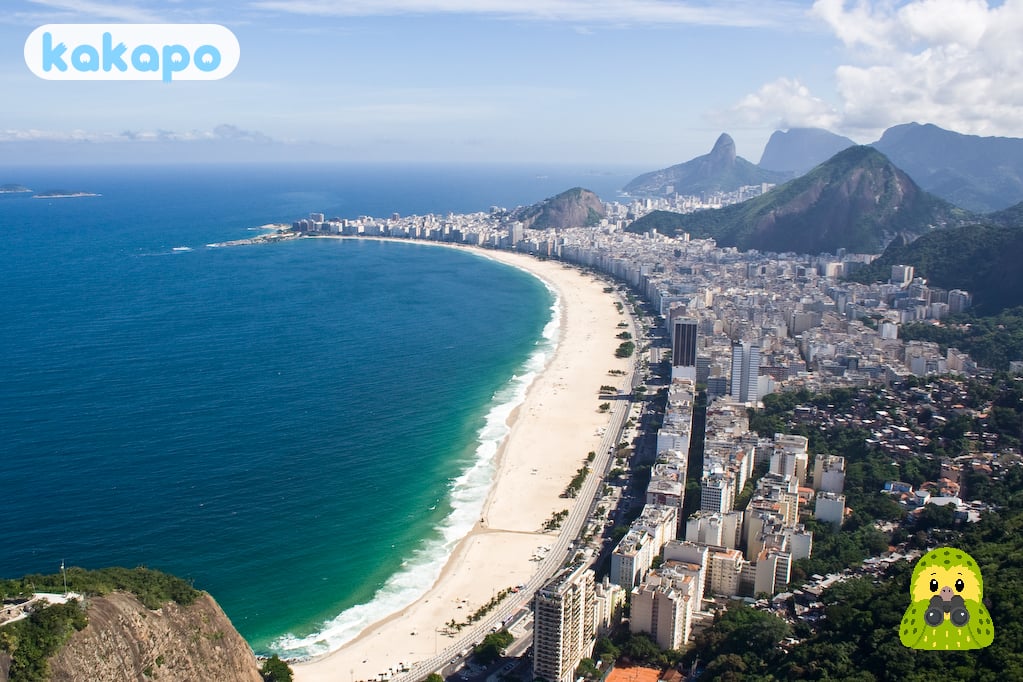
- Posto 1 (Leme end, north): the smaller, quieter end of the bay. The Leme neighbourhood sits behind it. The Forte Duque de Caxias (military fort, accessible) at the north headland.
- Posto 2-3 (central north): the Copacabana Palace, Pestana, the major beachfront hotels. Busiest tourist density.
- Posto 4-5 (central south): continuing south toward Posto 6. Hilton, Fasano-adjacent area.
- Posto 6 (Arpoador end, south): where Copacabana meets Arpoador and Ipanema beyond. The famous Praia do Arpoador headland and the sunset gathering point.
- The streets one block back: Rua Barata Ribeiro is the major parallel commercial street; Rua Bolívar and Rua Santa Clara further back. The atmosphere shifts from beachfront-tourist to local-residential.
- The metro: three Copacabana stops on the metro line 1 — Cardeal Arcoverde, Siqueira Campos, Cantagalo. All within 200m of the beach. Safe at metro-operating hours.
The mosaic promenade — what's actually safe
- The Avenida Atlântica mosaic walk: the famously photographed wavy pattern, runs 4km Leme to Posto 6. Well-lit, heavily walked until midnight, Polícia Militar tourist-police patrolling.
- The kiosks (Quiosques): ~30 numbered beachfront kiosks selling caipirinhas, snacks, mate (cold tea). Fine for daytime and early evening; the late-night (post-22:00) kiosks attract phone-snatch teams who target seated diners.
- The runners and walkers: Copacabana is one of Rio's most-used running routes. Locals run it day and night; the night-run scene is real but be aware that phone-snatch from runners has happened.
- The Wednesday and Sunday Avenida Atlântica closure: the inner lane of Avenida Atlântica closes to traffic Wednesday afternoons and all day Sunday; the street becomes a pedestrian/cyclist zone. Substantially busier on these days; safer.
- The famous New Year's Eve (Réveillon): ~3 million people on Copacabana for the December 31 fireworks. Heavy police presence; specific safety briefings published by the city; bag-snatch and phone-snatch density spikes.
The sand at night — the documented risk
- The pattern: phone-snatch and bag-snatch teams work the sand strip after sunset. Typical: tourists sitting on towels with phones visible, or walking on the wet sand with bags. A team approaches; one distracts, one grabs; they sprint inland through the sand to a waiting motorbike.
- Why the sand specifically: it's outside the promenade's CCTV coverage, the lighting is weak, escape routes through the sand are easy for the snatchers and slow for victims and police.
- Defence: don't sit on the sand after dark. Walk on the mosaic promenade only after sunset. If you must access the sand at night (e.g. a hotel beach event), do so with the hotel's security escort.
- The kiosks at night: a slight variant. Kiosks 1-15 (Leme end) and 25-30 (Posto 6/Arpoador end) are the highest-risk late-night kiosks. The central kiosks (Posto 3-5) are busier and safer.
- The New Year's Eve sand: even on Réveillon night with 3 million people, phone-snatch incidents spike. Treat the sand as the high-risk zone regardless of the surrounding crowd.
The side streets — Rua Barata Ribeiro and back
- Rua Barata Ribeiro: the major parallel commercial street one block back from the beach. Fine until ~22:00; gets quieter and rougher after midnight. The southern end (toward Posto 6) is fine; the northern end (toward Posto 1 / Leme) is the segment with the documented late-night incidents.
- The Praça do Lido area (Posto 1 end): the small square at the north end of Copacabana, between the beach and the Leme tunnel. Some redevelopment 2024-25 but still the segment to walk briskly through after dark.
- The Leme tunnel underpass: connects Copacabana to Botafogo via Av. Lauro Sodré. Daytime fine; late-night the tunnel itself is OK but the immediate exits attract loiterers.
- The Cantagalo-Pavão-Pavãozinho favela cluster: the favela complex above Copacabana, with the famous Cantagalo elevator from General Osório metro to the viewpoint. The elevator and viewpoint platform are fine; do not wander beyond.
- The streets behind Rua Bolívar: working-class residential, fine in daylight; the streets between Avenida N. S. de Copacabana and the favela base are the ones where a confused tourist with a phone out is conspicuous.
- Avenida Nossa Senhora de Copacabana: the major commercial spine (one block further back than Barata Ribeiro). Heavily walked, well-lit, fine at any hour.
An evening out in Copacabana — the practical brief
- Restaurant choices: the famously-good Cervantes (the giant pineapple-ham sandwich), Marius Crustáceos (seafood), Galitos Grill (Portuguese grilled chicken), Boteco Belmonte (locals' boteco), the various Avenida Atlântica beachfront restaurants (Rio Scenarium-adjacent atmosphere).
- Beach bars: the Quiosque do Caboclo (chain of beachfront kiosks, the busy/safer central ones), Pavão Azul (locals' beachfront), the Copacabana Palace's bar terrace (if your hotel budget permits).
- Walking back to your hotel: stay on the mosaic promenade if your hotel is on or near Avenida Atlântica; cross at well-lit Posto signs; avoid the sand. For hotels off the beachfront, use Uber/99 rather than walking through the side streets.
- Last metro: ~midnight for line 1 (the line that serves Cardeal Arcoverde, Siqueira Campos, Cantagalo). After that, Uber is the move.
- Uber and 99: both work flawlessly in Copacabana, abundant supply day and night. R$15-35 for typical Copacabana trips in 2026.
- Yellow taxis: licensed and fine; demand the meter. The catch is unmarked white-cab taxi touts at the major hotel entrances — overcharge by 50-100%. Use Uber.
If something happens
- 190 — Polícia Militar (Brazilian state police) emergency. English-speaking officers usually available in tourist precincts.
- 192 — medical emergency.
- DEAT (Delegacia de Atendimento ao Turista): Rio's dedicated tourist police unit. A station at Avenida Afrânio de Melo Franco 159 in Leblon and a satellite at Posto 6 in Copacabana. English-speaking; the place to go for stolen passports, incident reports for insurance.
- UK Consulate Rio: +55 21 2555 9600. US Consulate Rio: +55 21 3823 2000.
- Lost passport: file police report at DEAT; then your consulate. Brazil allows exit on emergency travel documents.
- The Copacabana Palace and Hilton concierges will arrange police-report assistance even for non-guests in serious cases. Worth knowing.
Frequently asked questions
Is Copacabana safe to walk at night in 2026?
The mosaic promenade along Avenida Atlântica is safe and busy with joggers, families and tourists until midnight, with permanent tourist-police presence and comprehensive CCTV. The catches are the sand strip itself (documented phone-snatch zone after sunset — don't sit on the sand at night), the side streets one block back (lower Rua Barata Ribeiro, Praça do Lido near Posto 1) after midnight, and the kiosks at the Leme end and Arpoador end after 22:00.
Is the Copacabana beach safe at night?
The promenade yes, the sand no. Bag-snatch and phone-snatch teams work the sand after sunset — the sand is outside CCTV coverage, lighting is weak, and the snatchers can sprint inland through the sand to a waiting motorbike. Stay on the mosaic promenade; don't sit on the sand at night; if you must access the sand for a hotel beach event, do so with the hotel's security escort.
Which end of Copacabana is safest at night?
Posto 3-5 (the central stretch with the Copacabana Palace, Pestana, Hilton anchors) is busiest and safest. Posto 1 (Leme end) has the Praça do Lido and the underpass to Leme — both rougher than the central stretch. Posto 6 (Arpoador end) is fine and the famous sunset gathering point. The kiosks at the Leme end (1-15) and the Arpoador end (25-30) are the highest-risk late-night kiosks; central kiosks are busier and safer.
Should I walk on Rua Barata Ribeiro at night?
Until 22:00 yes; after midnight prefer Avenida N. S. de Copacabana (the next street back, well-lit and walked) or take an Uber. Rua Barata Ribeiro's southern end (toward Posto 6) is fine; the northern end (toward Posto 1 / Leme) is the segment with the documented late-night incidents. The lower end near Praça do Lido is the textbook "looks fine on a map, isn't" mistake.
Are Copacabana taxis safe at night?
Licensed yellow taxis with meter-on are fine; the catch is the unmarked white-cab touts at the major hotel entrances who overcharge by 50-100%. Use Uber or 99 instead — both work flawlessly in Copacabana, abundant supply day and night, R$15-35 for typical Copacabana trips in 2026. App-based payment and complaint trail eliminate the kerbside overcharge problem.
What about during Carnival or New Year's Eve?
Carnival blocos and the Réveillon (December 31 fireworks, ~3 million people on Copacabana) substantially increase phone-snatch density. The compensating factor is heavy police presence. Crossbody bag with zipper toward body, no phone-in-hand, no jewellery, no visible camera. Sand-area incidents spike on Réveillon despite the crowd; treat the sand as high-risk regardless.
How do I get back to my hotel from Copacabana at 2am?
Uber or 99 — both abundant in Copacabana at any hour. R$15-35 for typical Copacabana trips. Last metro on line 1 is ~midnight (last train from Cantagalo, Siqueira Campos or Cardeal Arcoverde toward central/north). Walking on Avenida Atlântica back to your hotel is fine if you're on the beachfront strip; off-beachfront hotels are best reached by Uber rather than walking through the side streets late.
Sources
Run a business in Copacabana, Rio de Janeiro?
Show visitors your Copacabana, Rio de Janeiro business is a safe choice. The free Verified by Kakapo badge puts Copacabana, Rio de Janeiro's live safety score on your website, links back to your verified page, and updates itself. No cost.
Get the free badge →