


Is Petra, Jordan Safe? A 2026 Travel Safety Guide
What's actually risky at Petra — heat, the long walk, donkey scams, climbing tombs, and the regional advisory context.

Petra is one of the safer destinations in the Middle East and one of the more physically demanding tourist sites in the world. The realistic risks are heat (which has caused multiple visitor fatalities in recent years), the genuinely long walking distances inside the site, donkey/horse/camel scams at the entrance, climbing tombs without guidance, and the occasional flash flood through the Siq.
The UK FCDO and US State Department list Jordan at Level 2 ("exercise increased caution") with specific warnings about the borders with Syria and Iraq (none of which are anywhere near Petra). Wadi Musa (the modern town next to Petra) and the Petra archaeological park itself have no specific advisory beyond Jordan's general note. Tourist police are visible throughout the site.
The honest framing: Petra is in the south of Jordan, far from the geopolitical hotspots that dominate Middle East news. Most visitors fly into Amman or take the King's Highway south, spend 1-3 days at Petra, and have an excellent and entirely uneventful experience. The realistic safety questions are physical — water, sun, and pacing — not security.
In 2026, the practical landscape looks like this: the Jordan Pass (JD 70-80 depending on Petra nights, includes the visa-on-arrival fee and Petra entry) is now the default — buying a standalone Petra ticket without it is almost always a worse deal. The JETT bus from Amman's 7th Circle terminal to Wadi Musa runs daily for around JD 11 and takes about four hours; the Desert Highway is fully paved and unremarkable. The Wadi Araba land border crossing to Eilat (Israel) is open daily except Yom Kippur, with the usual Israeli stamp-in-passport considerations. Wadi Musa itself is a small basetown of ~17,000 people built up the hillside above the Petra Visitor Centre — most hotels are walking distance from the gate, and the higher-up properties throw in a free shuttle.
The single thing first-timers underestimate is scale: the Petra archaeological park is 264 km², the developed visitor circuit alone is ~8 km one-way, the Monastery (Ad Deir) trail is 800 stone-cut steps each way (~2 hours round trip from the main basin), and dehydration plus heatstroke have killed more recent visitors than any criminal incident in the park's modern history. Crime against tourists is essentially absent; the park is policed by Tourist Police and the surrounding Bedouin Bdoul community has been formally relocated to the village of Umm Sayhoun and now runs most of the in-park stalls and animal rides under a regulated concession system.
| Night safety | 88/100 |
|---|---|
| Scam / petty-crime risk | Medium |
| Violent crime (tourists) | Low |
| Most common scams | donkey/horse/camel scams at the entrance; Bedouin 'guide' pitches; posted prices at vendor stalls |
| Safer neighbourhoods | Wadi Musa, Petra archaeological park |
| Data sources cited | 4 |
| Last verified |
What the score means — 84/100
- Personal safety (90) — high. Crime against tourists is genuinely rare. Petty theft is uncommon; violent incidents are essentially unreported.
- Night (88) — Wadi Musa, the modern town, is lit and calm. Petra by Night (a paid candlelit experience) is well-organised.
- Transport (78) — JETT bus from Amman, taxi, or private driver. The desert highway is well-built; rural roads less so.
- Healthcare (76) — Wadi Musa has a small clinic; major cases evacuate to Amman (3-4h by ambulance). Travel insurance with air-evacuation cover essential.
Heat — the actual #1 risk
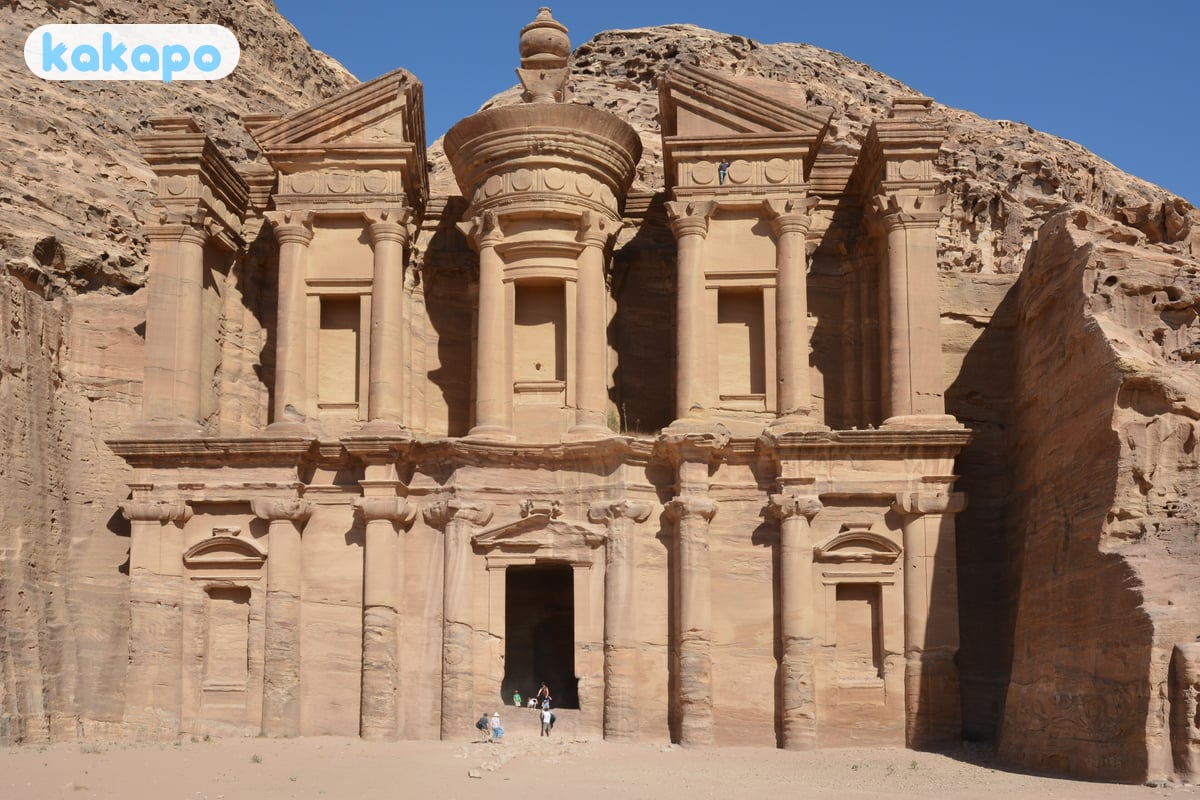
Petra has had multiple visitor heatstroke fatalities in the last decade. The site is exposed, mostly without shade, and the walking distances are deceptive.
- Summer temperatures (June-September) routinely hit 38-42°C. Stone surfaces radiate additional heat.
- The walking distance is real: Visitor Centre → Treasury → Royal Tombs → Monastery is ~8 km one way, with significant elevation. The Monastery alone is 800 stairs up.
- Water: bring at least 2-3 litres per person. Vendors inside the park sell water at marked-up prices; that's fine, but don't run dry between vendors.
- Start early: gates open at 6am. Be at the Treasury by 7:30am. Mid-day in summer = back at hotel pool.
- Hat, electrolytes, sunscreen, light long-sleeve clothing (sun protection > exposed skin in this climate).
- Spring (March-May) and autumn (October-November) are the realistic visiting seasons. Winter (December-February) is cold and occasionally snowy.
The Siq, the Treasury, and the long walk

The Siq is the 1.2 km narrow gorge from the Visitor Centre to the Treasury (Al-Khazneh). It's the iconic Petra approach.
- Flash floods through the Siq: rare but real. Sudden rain in the surrounding hills funnels through the narrow gorge. Park authorities close the Siq when rain is forecast in the catchment area.
- If you're in the Siq when warning sirens sound: head to the elevated areas immediately (rock platforms either side). Don't try to walk out; the water comes faster than you can run.
- Horse rides into the Siq: included with your ticket (technically). Tipping the rider 5-10 JD is expected. Horse welfare has been a recurring international concern; many travellers walk to avoid the ethical question.
- The Treasury: spectacular and busy. Most photographers do the iconic shot from the Siq exit; the staircase up to the "viewpoint" overlooking the Treasury is steep and unrailed in places.
Donkeys, camels, vendor pressure
- "Free" donkey/camel rides: nothing is free. Agree the price before mounting. Typical fares: short ride 5-10 JD, longer 15-25 JD.
- Donkey welfare: variable. Many animals work hard in heat. Some travellers refuse to ride for ethical reasons.
- The Monastery donkey ride: 800 steps, full sun. Donkeys carry visitors up. Skip the ride down — the descent is harder on the animals than the ascent.
- Bedouin "guide" pitches: kids and young men offer to "show you a special viewpoint." Some are genuine and worthwhile (the Royal Tombs back-route, the High Place of Sacrifice). Some lead to long climbs ending with demands for unagreed fees.
- Souvenirs at vendor stalls: bargaining is normal. Posted prices are usually 2-3× the real price.
- "VIP entry" / "skip the queue": don't exist. Buy your Petra ticket at the Visitor Centre window or pre-book online.
Climbing tombs — what's allowed
Petra has hundreds of carved tomb facades, many at significant heights. The climbing rules:
- Permitted: most ground-level tomb interiors, the Royal Tombs steps, the marked High Place of Sacrifice trail, the marked Monastery trail.
- Discouraged but not prohibited: many off-trail rock scrambles. Local Bedouin guides know which ones are safe.
- Dangerous: rock-cut staircases without modern handrails, especially after rain. Multiple fatal falls have occurred over the years.
- Snake encounters: rare but real in summer. Watch where you put your hands when climbing.
- "Petra by Night": the candlelit Treasury experience (Mon/Wed/Thu evenings). Walk-only; no climbing. Beautiful and well-organised.
Regional context — Jordan's advisory
- Jordan is a stable monarchy and one of the safer countries in the Middle East. Both UK FCDO and US State Department maintain low advisories for the country generally.
- Avoid the borders with Syria and Iraq — the FCDO has higher warnings for those specific zones. Petra is 250+ km from the nearest border concern.
- The Israel-Gaza conflict has at times produced demonstrations in Amman; Wadi Musa and Petra have been unaffected.
- Tourist sites in Jordan have additional security: ticket-checks, vehicle inspections, visible police presence at Petra, Wadi Rum, the Dead Sea, and the Roman ruins at Jerash.
Getting to Petra and around
- From Amman (Queen Alia Airport — AMM): 3.5h by car/taxi via the Desert Highway. Private driver with Jett or Tobgi: ~$100 USD one-way. JETT bus daily: ~$15 USD.
- From Aqaba (south): 2h by car. Some travellers fly into Aqaba (AQJ) instead.
- Renting a car: fine for confident drivers. Roads are well-built; signage is bilingual.
- Within Wadi Musa: small town, walkable. Hotels offer shuttle to the Visitor Centre.
- Inside Petra: walking is the main mode. Horse, donkey, camel, golf-cart options exist (paid).
Surrounding area — Wadi Musa, the park, and the wider south
- Wadi Musa centre — the basetown built up the hillside above the Visitor Centre. Movenpick Resort Petra (USD 200-280) sits directly opposite the park gate; Petra Guest House's Cave Bar (carved into a real 2,000-year-old Nabataean tomb) is the atmospheric drinks pick. Most mid-range hotels cluster around the Shaheed Roundabout 1.5 km uphill, with free shuttles down.
- Petra Visitor Centre & ticket hall — where Jordan Pass holders scan in; standalone tickets sold here too (1-day JD 50, 2-day JD 55, 3-day JD 60). Tourist Police, bathrooms, the free horse to the Siq entrance (rider tip 5-10 JD expected), and the start of the 1.2 km Siq walk.
- Umm Sayhoun — the Bedouin Bdoul relocation village uphill from the park. The Bdoul tribe lived in the Petra caves until the 1985 UNESCO designation; the Jordanian government rehoused them here and they hold the in-park concession for animals, stalls and many of the Bedouin-camp homestays.
- Little Petra (Siq al-Barid) — 9 km north of the main site, free entry, often empty. A 15-minute walk through a miniature siq with carved caravanserai facades; pairs well with a Bedouin tea stop and the back-door hike into the Monastery from the north.
- The Monastery (Ad Deir) trail — 800 carved steps from the basin floor, ~2 hours round-trip from the museum, the most rewarding climb in the park. The "Best View in the World" cliff terrace is another 10 minutes beyond the facade.
- High Place of Sacrifice — the alternative climb, 800 steps up from the Roman theatre, descending past the Garden Tomb and Lion Fountain back into the main basin. Quieter than the Monastery trail and a useful Treasury-to-Royal-Tombs back route.
- Royal Tombs cliff — the row of huge facades (Urn, Silk, Corinthian, Palace) above the colonnaded street, accessed by a short staircase. Late-afternoon golden hour is the photographic sweet spot.
- Wadi Rum — 100 km south, the desert valley of Lawrence-of-Arabia and Martian-film fame. Most people pair it with Petra as a one- or two-night Bedouin-camp add-on.
- Aqaba — 130 km south on the Red Sea, Jordan's only coastal city, dive sites, and the Wadi Araba border to Eilat (open daily except Yom Kippur).
- King's Highway via Dana — the scenic northern approach from Amman through the Dana Biosphere Reserve and the Crusader castles at Karak and Shobak. Adds 2-3 hours over the Desert Highway but is the more interesting drive.
If it's your first time visiting
- Buy the Jordan Pass before you fly. JD 70 (1-day Petra), JD 75 (2-day) or JD 80 (3-day) — it bundles the JD 40 visa-on-arrival fee and Petra entry, and saves the Wadi Rum and Jerash ticket costs on top. Skip it only if you're transiting through for under 24 hours, in which case a standalone Petra ticket is JD 50.
- Get there from Amman by JETT bus for JD 11 (4 hours, daily 06:30 from 7th Circle to Wadi Musa) or by private driver for ~USD 100. Renting a car is fine for confident drivers — roads are well-built, signage is bilingual, the Desert Highway is unremarkable.
- Petra by Night runs Mon/Wed/Thu only at 20:30, JD 17, walk-only candlelit Siq experience to the Treasury. Buy at the Visitor Centre that afternoon; it doesn't sell out except in peak spring weeks. Skip if you're tired — you've already done the same walk.
- Sleep close to the gate. Movenpick Resort Petra (USD 200-280) is literally opposite the Visitor Centre; Petra Guest House sits beside it and runs the atmospheric Cave Bar; mid-range options around the Shaheed Roundabout shuttle you down. Staying down by the gate buys you a 6am start.
- Politely decline the horse from the Visitor Centre to the Siq. It's technically included with your ticket but the rider expects 5-10 JD tip and the walk is short, easy and more atmospheric. Same with the in-park camel and donkey touts — agree any price upfront (typically 5-25 JD) and never accept "free".
- Budget 2 days minimum, ideally 3. Day 1 is the main circuit to the Monastery (~6 hours). Day 2 is the High Place of Sacrifice plus the back trails. Day 3 is Little Petra (Siq al-Barid) 9 km north plus the Bedouin trail descent into the Monastery.
- Carry 3 litres of water per person in summer. Dehydration and heatstroke are the actual leading causes of in-park emergencies — far ahead of falls or crime. Vendors inside the park sell 1.5L bottles for ~2 JD; that's fine, but don't run dry between stalls.
- For the Wadi Araba border to Israel: open daily except Yom Kippur, JD 10 exit fee, 1 km no-man's-land walk between immigration posts. Israeli stamp goes on a separate slip on request — useful if you're onward to other Arab countries.
- Cash works alongside cards. ATMs in Wadi Musa dispense JD; major hotels and the Petra ticket window take Visa/Mastercard. Bedouin stalls and animal rides are JD cash only. USD is widely accepted in tourist hotels but you'll pay 5-10% over the proper rate.
- The realistic hazards are physical, not criminal. Heatstroke, snake encounters on summer scrambles, unrailed rock-cut staircases after rain, and rare flash floods through the Siq. Crime against tourists is essentially unreported — Tourist Police are visible throughout the 264 km² park.
Practical info — emergency numbers
- Police: 191 (general) or 911.
- Tourist Police: stationed at the Visitor Centre and throughout the site.
- Ambulance / Fire: 911.
- Petra Visitor Centre: +962 3 215 6068.
- Wadi Musa Hospital: +962 3 215 6025.
- Petra ticket: 1-day 50 JD, 2-day 55 JD, 3-day 60 JD; included in the Jordan Pass (cheaper if you're doing multiple sites).
Bring: 2-3 litres of water per person, salt tablets / electrolytes, hat, sunscreen, sturdy shoes (the rock surfaces are uneven), light long-sleeve clothing, a head torch for Petra by Night, and travel insurance with air-evacuation cover. Currency is Jordanian dinar (JD).
Frequently asked questions
Is Petra safe to visit in 2026?
Yes. Petra is one of the safer destinations in the Middle East. US State Department lists Jordan at Level 2 (exercise increased caution) with Level 4 carve-outs for the Syria/Iraq borders — Petra is 250+ km from any of them. UK FCDO has the same posture. Crime against tourists at Petra is rare; Tourist Police are visible throughout the site. The genuine risks are physical: heat (which has caused multiple visitor fatalities), the deceptive walking distance, unrailed rock-cut staircases, and rare flash floods through the Siq — not security.
Is Petra safe at night?
Yes. Wadi Musa, the modern town next to the archaeological park, is calm, lit, and used to international tourists late. The official 'Petra by Night' candlelit Treasury experience (Mon/Wed/Thu evenings) is well-organised, ticketed, and entirely walk-only — no climbing in the dark. The archaeological site itself closes at sunset and is not accessible after dark outside the Petra by Night ticket. Restaurants and hotels in Wadi Musa stay open into the evening.
Is Petra safe for solo female travellers?
Yes, with the usual Middle East adjustments. Tourist Police are visible throughout the site, the archaeological park is busy with international visitors during daylight, and Wadi Musa is small and walkable. Catcalling is uncommon at the site itself but young Bedouin men sometimes offer persistent 'special viewpoint' or marriage-proposal pitches — a firm 'la, shukran' (no, thank you) ends it. Modest dress (knees and shoulders covered, long sleeves preferable for sun) is practical for both cultural and heat reasons.
Can you drink tap water in Petra/Wadi Musa?
No — stick to bottled or filtered. Wadi Musa's tap supply is treated but mineral-heavy and irregular, and the area is at high elevation with old plumbing in most hotels. Bottled water is cheap (under 1 JD for 1.5L) and available everywhere. Inside the archaeological park, vendors sell bottled water at marked-up prices — that's fine, but carry 2-3 litres per person from the start of the day, especially in summer.
What's the biggest scam to avoid at Petra?
The 'free' donkey, horse, and camel rides — nothing is free. The horse ride from the Visitor Centre to the Siq entrance is technically included with your ticket but the rider expects a 5-10 JD tip; any other animal ride needs a price agreed upfront (typically 5-25 JD). Other recurring patterns: unofficial Bedouin 'special viewpoint' guides who lead long climbs then demand unagreed fees; vendor-stall opening prices that are 2-3x the real price; and 'VIP entry / skip the queue' offers that don't exist (buy tickets at the official Visitor Centre window or the Jordan Pass online before flying).
Is Petra's summer heat really that dangerous?
Yes — this is the single biggest risk at the site, and visitor heatstroke fatalities have occurred in recent years. June-September routinely hits 38-42°C with stone surfaces radiating additional heat and almost no shade on the main trails. The Visitor Centre to Monastery walk is roughly 8km one way with 800 steps at the end. Gates open at 6am; aim to be at the Treasury by 7:30am and off the high trails by 11am. Carry 2-3L water per person, electrolytes, a hat, sunscreen, and light long-sleeve clothing. Spring (March-May) and autumn (October-November) are the realistic visiting seasons; in mid-summer, plan to retreat to a hotel pool from late morning to late afternoon.
Sources
Run a business in Petra?
Show visitors your Petra business is a safe choice. The free Verified by Kakapo badge puts Petra's live safety score on your website, links back to your verified page, and updates itself. No cost.
Get the free badge →