


Is Muscat, Oman Safe? A 2026 Travel Safety Guide
The conservative dress code, wadi flash floods, summer heat, the mountain road conditions, and the realistic risks of the Gulf's most low-key capital.

Muscat is one of the safest large cities in the Middle East for tourists, and the Gulf's most low-key capital. Crime against visitors is essentially nonexistent; Omani hospitality is genuine and frequently noted by first-time visitors as a defining feature of the trip.
The realistic risks for visitors are the heat (40-45°C in summer), the conservative legal code (Oman is more relaxed than Saudi or Qatar but still has rules around alcohol, dress, and conduct), wadi flash floods after rare rains, and the mountain-road conditions if you head into the Hajar mountains for the famous wadis and forts.
Oman sits at Level 1 on the US State Department's advisory list. UK FCDO is similarly low. The honest framing: Muscat is small (~1.5 million metro), spread along the coast, low-rise, mostly modern with traditional touches. Mutrah Corniche, the Sultan Qaboos Grand Mosque, the Royal Opera House, and the souq are the city anchors. Day trips to Wadi Shab, Bimmah Sinkhole, and Nizwa are the real reward.
What catches first-time visitors most off-guard isn't safety or heat — it's the city's low-rise discipline. Sultan Qaboos's planning code (still followed under Sultan Haitham) bans buildings taller than 8-10 storeys across virtually all of Muscat, so the city sprawls horizontally along the coast for 50 km without a single Dubai-style skyline. The result is a capital that feels suburban in scale and traditional in texture: white-and-cream villas with carved doors, frangipani trees, the mountains rising directly behind. Omani men wear the dishdasha (long white robe) and kuma (embroidered cap) or massar (turban) almost universally as everyday wear, not as costume — visitors are not required to do anything similar, but modest dress matters and gets you treated better. The two national radio stations RIF (in English) and OAR (in Arabic) and a dishdasha modesty norm are part of how Muscat reads.
In 2026 the practical changes since pre-pandemic: the eVisa system (evisa.rop.gov.om) replaced visa-on-arrival for most nationalities — apply 3 days ahead, OMR 5 for 10 days or OMR 20 for a month; alcohol licences for residents have been simplified but tourists still drink only at licensed hotel bars/restaurants; the new Mwasalat M1 fast bus runs Muscat-Sohar-Khasab and ferries connect to Musandam; and the Oman Across Ages Museum at Manah (90 min south) has opened as a major addition to the cultural circuit.
| Night safety | 88/100 |
|---|---|
| Scam / petty-crime risk | Low |
| Violent crime (tourists) | Low |
| Safer neighbourhoods | Mutrah, Ruwi, Shatti Al-Qurum |
| Data sources cited | 4 |
| Last verified |
What the score means — 90/100
- Personal safety (94) — extraordinarily high. Crime against tourists is essentially nonexistent.
- Healthcare (86) — Royal Hospital and Sultan Qaboos University Hospital are excellent. Private hospitals (Muscat Private, Burjeel) for non-residents.
- Transport (84) — Mwasalat buses are good; taxis are honest with negotiation; no metro.
- Air quality (80) — moderate. Dust + summer haze.
The legal code — relaxed by Gulf standards, still real
Oman is more open than Saudi or Qatar but still conservative compared to Western norms.
- Alcohol: legal in licensed hotel bars and restaurants. Don't drink in public; don't be drunk in public. Bringing alcohol into the country: limited duty-free allowance.
- Dress: visitors aren't required to wear traditional dress, but shoulders and knees covered in malls, public buildings, mosques (and ideally elsewhere). At Sultan Qaboos Grand Mosque, women must cover hair, ankles, wrists; men long pants. Abayas and scarves are available at the entrance.
- Beachwear: at hotel pools/beaches only. Otherwise covered.
- Public conduct: holding hands as a married couple is fine; kissing in public is not. Same-sex relationships are illegal.
- Photography: don't photograph people without permission, especially women. No military/government building photos.
- Ramadan: don't eat, drink, or smoke in public during daylight hours.
- Drugs: zero tolerance.
- Vapes: technically banned, often imported anyway. Don't carry openly.
Wadis and flash-flood risk
Wadis (dry riverbeds with seasonal pools) are the iconic Oman landscape. Wadi Shab and Wadi Bani Khalid are the most-visited from Muscat. They're beautiful, swimmable, and occasionally lethal — flash floods after rare-but-intense rain can sweep through canyons in minutes.
- Don't enter wadis on rainy days or after recent rain in the upstream catchment, even if the local weather looks fine.
- Locals know: ask the police checkpoint at the wadi entrance if conditions are safe.
- If thunder is audible from upstream — leave the canyon immediately.
- Wadi Shab swim: 45-min walk in, then a swim through narrow gorges to the famous waterfall cave. Fitness + swimming ability required. Life jackets at the entrance kiosk.
- Bimmah Sinkhole: roadside collapsed limestone cave, swimmable. Stairs down. Touristy and easy.
The mountain roads — Jebel Akhdar, Jebel Shams
- Jebel Akhdar: 2,000 m plateau, the "Green Mountain". Roses and pomegranates. Reachable via a steep mountain road; Oman regulation requires 4WD only past the police checkpoint at Birkat Al Mouz. They check.
- Jebel Shams: 3,009 m, "Oman's Grand Canyon". Last 30 km is graded gravel; 4WD highly recommended.
- Wadi Ghul / "Balcony Walk": 4-hour cliff-edge hike; spectacular and exposed. Don't do in heat.
- Self-driving: rent a 4WD specifically (not a car) for these. Standard cars get turned back at the checkpoint.
- Mountain weather: 10-15°C cooler than Muscat. Surprising rain in winter.
Transport, taxis, the airport
- Mwasalat buses: city + intercity service, modern fleet, A/C. Cheap.
- Taxis: orange-and-white, mostly fixed-fare or negotiated. Apps Otaxi and Marhaba operate.
- Car rental: easy, reasonable prices. Good way to do day trips. International Driving Permit + home licence.
- Driving: by Gulf standards, calmer than UAE/Qatar. Still drive defensively. Camels can wander onto rural roads.
- Muscat International Airport (MCT): 32 km west. Mwasalat bus 1 OMR; taxi 7-10 OMR.
Money, food, and souq logistics
- Currency: Omani rial (OMR). $1 ≈ 0.38 OMR. Strong currency.
- Cards: widely accepted in hotels, malls, restaurants. Souq cash-only.
- ATMs: BankMuscat, NBO. Honest fees.
- Tipping: 10% in restaurants if no service charge. Round up taxis.
- Mutrah Souq: traditional market. Bargain at 30-50% off opening price.
- Tap water: safe in Muscat. Bottled in rural areas.
Neighbourhood-by-neighbourhood breakdown
- Mutrah — the old port quarter; the Mutrah Corniche promenade, Mutrah Fort, and the Mutrah Souq (traditional covered market — frankincense, silver khanjar daggers, pashminas). Bargain at 30-50% off opening prices; closes around 22:00. Comfortable any hour; the Corniche is the city's evening promenade.
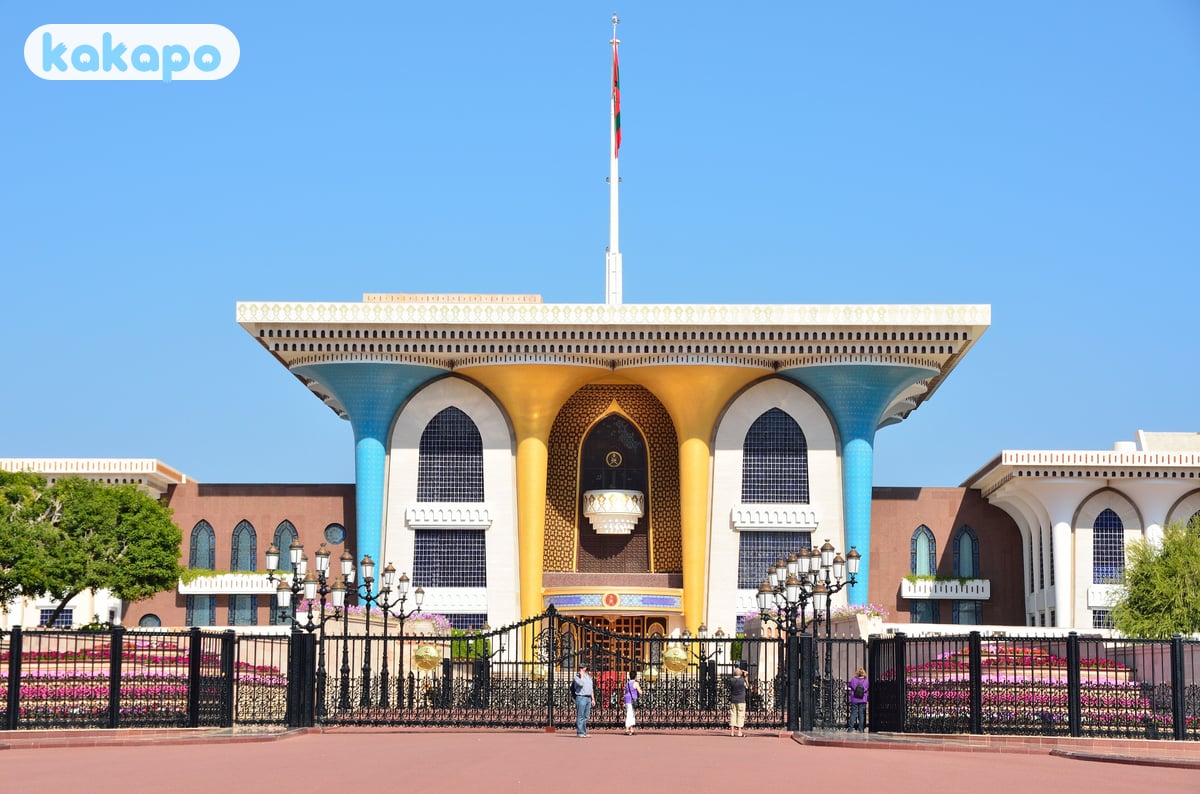
- Old Muscat (Muscat proper) — the original walled town between Mutrah and the eastern coast; Al Alam Royal Palace (no entry, photo from gate), Jalali and Mirani forts (Portuguese-built, 1580s), the Bait Al Zubair museum. Compact and atmospheric.
- Ruwi — the commercial business district (sometimes called "Little India" for its South Asian expat community); Mwasalat bus station, banks, currency exchange, midrange hotels. Functional rather than picturesque; safe at all hours.
- Qurum — modern residential and the central beach district; Qurum Beach (3 km of public sand), Qurum Natural Park, the Royal Opera House, City Centre Qurum mall. Most international hotel-residences sit here.
- Shatti Al-Qurum — the upscale beach strip immediately west of Qurum; Crowne Plaza, InterContinental, Grand Hyatt; the better restaurants. Quiet, well-policed, expat-favoured.
- Al Mouj (The Wave) — newer waterfront development west of the airport; marina, golf course, low-rise apartments, expat hub.
- Royal Opera House Muscat (ROHM) — the cultural anchor in Shatti; world-class programming September-May (opera, ballet, classical, Arabic concerts). Strict dress code — long pants, closed shoes, no shorts; abayas/scarves loaned for women in some performances.
- Sultan Qaboos Grand Mosque — in Bawshar district; one of the world's largest mosques. Open to non-Muslims 08:00-11:00 Saturday-Thursday. Women need long sleeves, ankle-length skirt/trousers and a headscarf; men long pants. Scarves available but bring your own. The world's second-largest single-piece carpet is here.
- Dishdasha modesty norm — Omani men wear the dishdasha and kuma/massar universally as daily wear; women's dress is conservative (abaya plus hijab is the local norm, but visitors aren't required to match). For visitors: shoulders and knees covered in public; beachwear at hotel pools and beaches only; modest swimwear at public beaches (Qurum, Yiti).
- Alcohol licence — alcohol is legal in licensed hotel bars and restaurants only; tourists drink at hotels (InterContinental, Hyatt, Crowne Plaza, Shangri-La). Don't drink in public; don't be drunk in public. Bringing alcohol in: limited duty-free allowance (2L per non-Muslim adult).
- RIF and OAR radio — RIF (English-language, 96.5 FM) and OAR (Arabic-language, 94.0 FM) are useful when renting a car for the wadi day-trips. Highway-condition updates and prayer-time announcements.
If it's your first time visiting
- Best arrival airport: Muscat International (MCT) is 32 km west of the city; Oman Air and Salam Air are the home carriers. To centre: Mwasalat bus 1 ($2.50 / OMR 1), Otaxi/Marhaba ride-hail OMR 8-10, taxi OMR 7-10 (agree before getting in — no meters in standard orange-and-white).
- Public transport: Mwasalat city buses are modern, A/C, cheap (OMR 0.5-1). Otaxi is the local Uber-equivalent; Careem also operates. Most visitors rent a car after day 2 — driving in Muscat is calmer than UAE/Qatar, fuel is OMR 0.21/litre (USD 0.55/litre — among the world's cheapest), and a 4WD is required for Jebel Akhdar and Jebel Shams.
- Best neighbourhood for your first night: Shatti Al-Qurum for beach access and best restaurants; Mutrah for atmospheric old-town and the Corniche; Al Mouj for marina-modern and golf.
- Day 1, jet-lag friendly: morning at the Sultan Qaboos Grand Mosque (08:00-11:00 only for non-Muslims), lunch at Bait Al Bahr or Al Angham, sunset walk along Mutrah Corniche, dinner at the souq cafés or Kargeen Caffe (Qurum). The Royal Opera House evening if you have tickets — book at rohmuscat.org.om.
- Common rookie mistakes: drinking alcohol outside licensed venues (illegal — fines/jail), driving into a wadi after rain in the upstream catchment (flash floods kill — even if Muscat is clear), wearing shorts or sleeveless tops to the Grand Mosque (you'll be turned away), photographing women without permission or any military/government installation (police will intervene), assuming Friday is Saturday (Friday is the holy day — museums and many shops close 11:00-14:00 for prayers; the souq closes Friday morning), tipping in dollars (use OMR coins — taxi-round-up only is expected).
- Currency and tipping: Omani rial (OMR), $1 = 0.38 OMR — one of the world's strongest currencies. ATMs at BankMuscat, NBO, Bank Dhofar with honest fees. Cards at all hotels/malls; souq is cash. Tipping: 10% in restaurants if no service charge, round-up for taxis, OMR 1-2 for hotel porters.
- Book Wadi Shab guides and Jebel Akhdar accommodation 2-4 weeks ahead — Anantara Al Jabal Al Akhdar, Alila Jabal Akhdar, and Sahab Resort are the headline mountain hotels and book out in winter. Wadi Shab is self-guided (45-min walk in + swim) but life jackets and a guide are smart; book through Muscat Diving and Adventure Center.
- Ramadan changes everything — during the holy month (variable date) don't eat, drink, smoke or chew gum in public during daylight hours. Restaurants close until iftar (sunset), then come alive. Hotel restaurants stay open for non-Muslim guests but discreetly. Muscat softens visibly during Ramadan; it's actually a charming time to visit if you respect the rules.
- 4WD for the mountains — Jebel Akhdar requires 4WD by law past the Birkat Al Mouz police checkpoint; they check. Jebel Shams's last 30 km is graded gravel. Rent specifically a 4WD (not "any car") from Mark Tours, Sixt or Avis at the airport.
Practical info — emergency numbers
- Police: 9999.
- Ambulance: 9999.
- Royal Oman Police (general): 24560099.
- Royal Hospital: +968 2459 9000.
- Muscat Private Hospital: +968 2458 3600.
Bring: modest clothing (long sleeves + ankles for the Grand Mosque), reef-safe sunscreen, a refillable water bottle, an Omani SIM (Omantel, Ooredoo) at the airport for ~OMR 5, and travel insurance documentation.
Frequently asked questions
Is Muscat safe to visit in 2026?
Yes. Oman is one of the safest countries in the Middle East and Muscat is its calm, low-rise capital. US State Department lists Oman at Level 2 (regional-tension boilerplate, primarily citing the Yemen border far to the south) and UK FCDO advises against travel within 10km of the Yemen border only — Muscat itself is unaffected. Violent crime against tourists is essentially nonexistent and petty theft is rare. The realistic risks are summer heat, occasional flash-floods (wadis) in the wet season, and rural driving conditions.
Is Muscat safe at night?
Yes — Muscat is among the safest large Arab cities after dark. The Mutrah Corniche, Royal Opera House district, and the modern hotel zones along Shatti Al-Qurum are quiet and well-policed late. Solo walking is comfortable. Mutrah Souq closes around 10pm and the surrounding alleys empty out, so stick to the Corniche after that. Taxis (orange-and-white) are honest if you agree the fare upfront; Otaxi is the local app.
Is Muscat safe for solo female travellers?
Yes. Oman is widely considered the most relaxed and welcoming Gulf country for solo women. Harassment is rare and Omanis are famously polite. Modest dress (shoulders and knees covered) is the norm; for the Sultan Qaboos Grand Mosque, women need long sleeves, ankle-length skirt/trousers, and a headscarf (loaner scarves available but bring your own to be sure). Beachwear is fine at hotel beaches and pools only.
Can you drink tap water in Muscat?
Yes — Muscat's tap water is desalinated and safe to drink by WHO standards. Many locals and visitors still prefer bottled for taste. Bottled water is very cheap (under 0.2 OMR for 1.5L). In rural Oman and on mountain or wadi trips, stick to bottled or filtered.
What's the biggest scam to avoid in Muscat?
Muscat has remarkably few tourist scams. The main thing to watch is taxi fares — orange-and-white taxis are unmetered, so agree the fare before getting in (or use Otaxi/Careem). Mutrah Souq vendors negotiate hard but aren't deceptive; start at 30-50 percent off the opening price. Unlicensed dhow-cruise touts on the Corniche are best avoided in favour of established operators (Sidab Sea Tours, Marina Bandar Al Rowdha). Wadi and desert tours should be booked through a registered Oman Ministry of Tourism operator.
Are Oman's wadis and mountain roads safe to explore independently?
Mostly yes, with caveats. A 2WD reaches Wadi Shab, Wadi Bani Khalid, and Bimmah Sinkhole comfortably. Jebel Shams, Jebel Akhdar, and the deeper wadis require 4WD by law — rental contracts and insurance void in a 2WD. Flash floods after rain (mainly January-March and the khareef in Salalah) can fill a wadi in minutes; never camp in a wadi bed and check forecasts. Mobile signal disappears in canyons — tell someone your route. Roads have camels, goats, and rockfall; avoid driving after dark outside the city.
Sources
Run a business in Muscat?
Show visitors your Muscat business is a safe choice. The free Verified by Kakapo badge puts Muscat's live safety score on your website, links back to your verified page, and updates itself. No cost.
Get the free badge →