


Is Koh Tao, Thailand Safe? A 2026 Travel Safety Guide
Dive operator quality, the 'Death Island' label, ferry conditions, scooter crashes, the unsolved-tourist-deaths context, and the realities of the world's largest dive-certification island.

Koh Tao — population ~2,000 permanent residents, on a 21 km² island in the Gulf of Thailand — issues more open-water dive certifications per year than anywhere else in the world. Around 250,000-300,000 visitors a year. Day-to-day crime against tourists is generally low; the island is small and the regular dive crowd produces a small-town vibe.
The honest concerns are real. Koh Tao earned a "Death Island" tabloid label in 2014-2018 after a series of high-profile foreign tourist deaths (Hannah Witheridge and David Miller in 2014; Christina Annesley in 2015; Luke Miller and Nick Pearson in 2016; Elise Dallemagne in 2017). The convictions in the 2014 case were widely contested by the families and by the British Embassy review; the other deaths were variously ruled accidental, suicide, or remained unsolved. The Western tabloid framing is exaggerated — the deaths spanned years, were not connected, and Koh Tao's per-tourist death rate isn't notably outside the regional norm — but the legitimate concerns about local police investigation quality, conflict-of-interest in some inquests, and the lack of independent oversight remain and have been documented by the Foreign Correspondents' Club of Thailand. Beyond that, the volume of dive operators (~70 schools) means quality varies dramatically — fatal dive incidents have happened. Ferry crossings can be rough; scooter crashes are the leading injury cause. The ChooseToBeKind community advocacy group continues to ask families to verify safety records before booking.
The US State Department lists Thailand at Level 1; UK FCDO has no specific Koh Tao advisories but warns about low quality of investigations into deaths. Both note the standard ferry, dive and traffic context.
| Night safety | 64/100 |
|---|---|
| Scam / petty-crime risk | Medium |
| Violent crime (tourists) | Medium |
| Most common scams | drink-spiking incidents; fake dive operator safety records |
| Safer neighbourhoods | Mae Haad, Chalok Baan Kao, Tanote Bay |
| Data sources cited | 4 |
| Last verified |
What the score means — 82/100
- Personal safety (72) — moderate-high. Most visitors have only positive experiences; the score reflects the documented investigation quality concerns.
- Transport (68) — Lomprayah, Songserm, Seatran ferries from Surat Thani / Chumphon / Koh Phangan; pickup taxis on island; scooters dominant.
- Healthcare (60) — Koh Tao Hospital basic; serious cases medevac to Koh Samui (Bangkok Hospital Samui) or Surat Thani by speedboat then ambulance.
- Air quality (88) — pristine; affected briefly by burn-season smoke from mainland Thailand (Feb-April).
Dive operator quality — the key safety choice
Koh Tao has ~70 dive schools running ~200,000 PADI/SSI certifications a year. Quality varies enormously. Operator choice is the single most important safety decision you'll make.
- Reputable operators: Big Blue Diving, Crystal Dive, Master Divers, Scuba Junction, Ban's Diving, Roctopus. PADI 5-star Career Development Centres (CDC) — the highest tier.
- What to check: instructor:student ratio (max 4:1 ideally for Open Water), well-maintained equipment, in-water safety briefing, clear emergency procedures, certified rescue diver on every boat.
- Cheap operators (4,500-7,000 baht for OW): high churn, large groups, possible older equipment. Discounts come from somewhere.
- Mid-range (9,000-12,000 baht for OW): reasonable trade-off.
- Premium (13,000-18,000 baht for OW): smaller groups, top-tier equipment, more dive sites.
- Fatal dive incidents: documented at Koh Tao multiple times — usually involving lost-buoyancy, panic, or rapid ascent. Most involved students who panicked or new divers without adequate buddy supervision.
- Decompression sickness: nearest hyperbaric chamber is Koh Samui (90 min by speedboat). Don't fly within 24h of last dive (48h for repetitive multi-day diving).
- Don't dive if: you have unresolved cold/sinus issues, asthma without medical clearance, recent surgery, pregnant. Honest medical declaration is your responsibility.
The 'Death Island' context — what's actually known
Between 2014-2018 a cluster of high-profile foreign tourist deaths on Koh Tao drew international tabloid attention. The circumstances and investigations:
- Hannah Witheridge and David Miller (Sept 2014): murdered on Sairee Beach. Two Burmese migrant workers convicted in 2015 (death sentences later commuted to life). Convictions were widely contested by both families, multiple defence reviews, and a British Embassy investigation that questioned the evidence. The case shaped global perception.
- Subsequent deaths: Christina Annesley (Jan 2015 — ruled accidental overdose), Luke Miller (Jan 2016 — ruled accidental drowning), Nick Pearson (Jan 2014 — ruled accidental drowning), Elise Dallemagne (April 2017 — ruled suicide; family contested).
- The legitimate concerns: as documented by the Foreign Correspondents' Club of Thailand and BBC investigations — local police investigation quality, lack of crime-scene preservation, family difficulty getting independent autopsies, conflict-of-interest with island businesses.
- The exaggerated framing: the per-tourist death rate at Koh Tao is not notably higher than other backpacker islands. The deaths spanned years and were not connected to a single perpetrator or pattern beyond the general risk picture.
- What this means for visitors: don't be paranoid; do be aware. Tell friends/family which dive school you're using and check in daily. The ChooseToBeKind advocacy group encourages families to verify operator safety records and emergency contacts before booking.
- Don't walk Sairee Beach alone late at night: standard precaution that applies anywhere; multiple incidents have begun this way.
- Drink-spiking: occasional reports. Standard precautions: don't accept open drinks from strangers; don't leave drinks unattended.
Ferries — Lomprayah, Songserm, Seatran
- Three operators: Lomprayah (catamaran, fastest, 600-1,000 baht), Songserm (slower ferry, 400-700 baht), Seatran (similar to Lomprayah).
- Routes: Surat Thani / Chumphon mainland; Koh Phangan (1.5 hr); Koh Samui (2 hr).
- Sea conditions: Gulf of Thailand can be rough Oct-Dec (northeast monsoon). Lomprayah catamarans are stable in mild swell; Songserm slower ferries are more comfortable in big swell.
- Cancellations: in serious weather (gale-force monsoon), all ferries cancel. Build buffer time on flight connections.
- Sea sickness: take dimenhydrinate 30 min before sailing if prone.
- Lifejackets: visible on Lomprayah; Songserm older fleet check before boarding.
- Don't sail in a typhoon warning: Tropical Storm Pabuk (2019) caused a Songserm ferry capsize warning; reputable operators cancelled.
- Booking: 12go.asia, hostel desks, or directly. Joint ferry+bus tickets from Bangkok-Koh Tao available.
Scooters — Koh Tao's other big risk
- Why people rent: Koh Tao's tiny, hilly, pickup-taxi rates are 100-300 baht/short ride. Scooter is cheap (200-400 baht/day) and the standard.
- Why crashes happen: steep, narrow, sand-and-gravel-on-corners road from Sairee to Mae Haad to Chalok Baan Kao; oncoming traffic; Western riders unfamiliar with left-side; oil from previous crashes.
- The hill from Sairee to John Suwan viewpoint: notorious. Pedestrian-walk-it advice from local operators.
- Helmets: legally required; Thai police enforce.
- The "broken bike" scam: rental shop "discovers" pre-existing scratches at return and demands 1,000-5,000 baht. Defences: time-stamped video of bike at rental, never hand over passport (photo only or photocopy), check operator reputation (Big Boss is reputable; some smaller shops near Sairee Beach have repeat complaints).
- Insurance: most travel insurance voids motorcycle claims without IDP + home licence.
- If you crash: Koh Tao Hospital handles basic dressing/casts; serious injury speedboat to Koh Samui Bangkok Hospital.
Areas — Sairee, Mae Haad, Chalok, Tanote
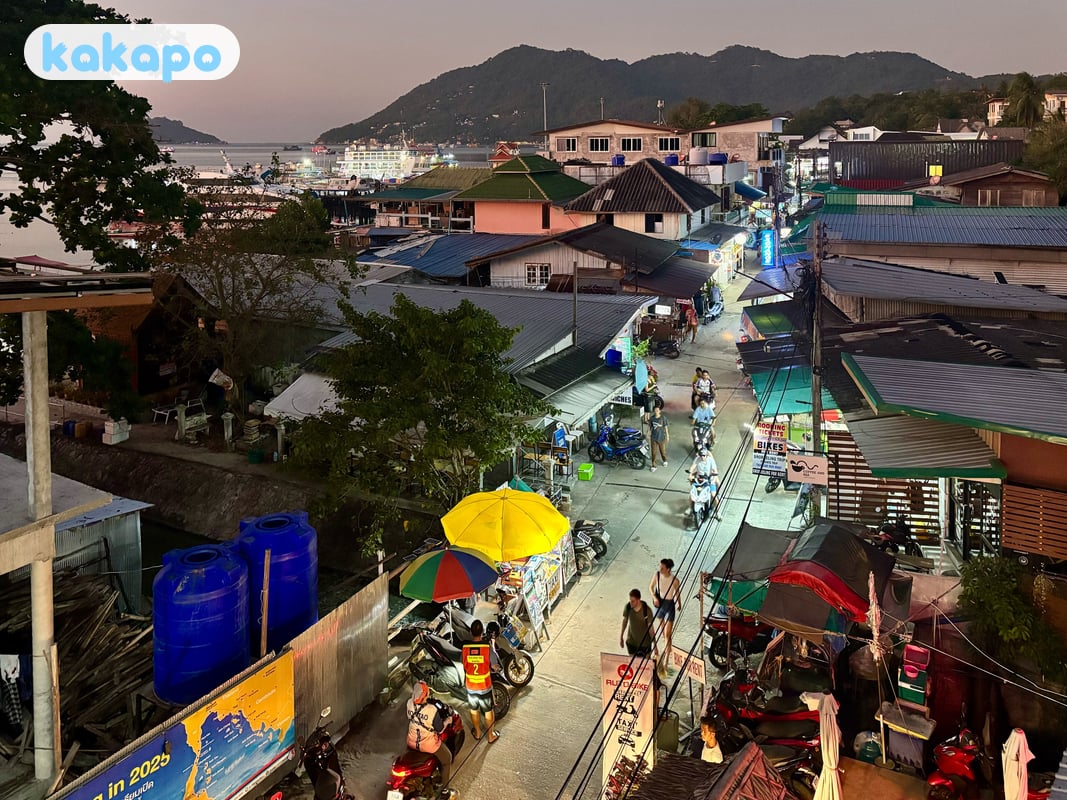
Recommended bases: Sairee Beach — main beach strip, dive schools, bars, sunset; busy. Mae Haad — pier town, restaurants, mid-range hotels; quieter than Sairee. Chalok Baan Kao — south coast, bay-side resort feel; quieter. Tanote Bay — east coast, snorkel-and-relax; very quiet, fewer restaurants.
Stay aware: Sairee Beach late at night — backpacker bar strip; the main 2014 murder happened here. Walk in groups; don't leave drinks unattended. Stick to lit areas after midnight.
There are no genuinely dangerous neighbourhoods on Koh Tao.
Snorkel sites, beach jellyfish, and reef hazards
- Snorkel sites: Shark Bay (small reef sharks), Tanote Bay, Aow Leuk, Hin Wong Bay. Water temperature 27-30°C year-round.
- Box jellyfish: present in Gulf of Thailand; occasional fatal stings reported (a Thai child died on Koh Phangan in 2014; another at Koh Mak 2022). Vinegar at major beach restaurants.
- If stung severely: pour vinegar 30 seconds; don't rinse with fresh water; call 1669 (ambulance) or 1155 (Tourist Police).
- Reef cuts: coral rash and sea urchin spines common. Carry antiseptic. Reef shoes for shore entries.
- Stonefish and scorpionfish: present; venomous; well-camouflaged. Reef shoes when wading.
- Triggerfish: protective during nesting season (Mar-Aug); will charge divers and snorkellers — back away horizontally, not vertically.
- Sharks: blacktip and whitetip reef sharks at Shark Bay — non-aggressive; bull sharks rare; whale sharks (Mar-May) are tourist-friendly gentle giants.
Money, food, emergency numbers
- Currency: Thai baht (THB). $1 ≈ THB 35.
- Cards: dive schools and better hotels yes; small Sairee bars cash. ATMs at Mae Haad and Sairee (foreign-card fee 220 baht typical).
- Tipping: not customary; round up; tip dive instructors 200-500 baht at end of course.
- Food: Sairee strip has international (pizza, sushi, Mexican, smoothies); Mae Haad has Thai street food and seafood. The Yellow Submarine and Common Grounds are café standards.
- Tap water: not drinkable. Bottled.
- Visa: 30 days visa-free for most Western nationalities at Thai entry.
- Emergency: 191 (police), 199 (fire), 1669 (ambulance), 1155 (Tourist Police, English).
- Hospital: Koh Tao Hospital (+66 77 456 631) basic; Bangkok Hospital Samui (+66 77 429 500) for serious. Hyperbaric chamber Koh Samui.
- SIM: AIS / TrueMove on mainland or at Koh Samui airport. eSIM (Airalo) easier — Koh Tao 4G coverage decent in Sairee/Mae Haad.
- Travel insurance: must cover scuba diving (PADI Open Water depth 18m; Advanced 30m+) and motorcycle if you'll ride.
Frequently asked questions
Is Koh Tao safe to visit in 2026?
Yes for the great majority of visitors. Thailand sits at US State Department Level 1; UK FCDO has no specific Koh Tao advisories. Day-to-day crime against tourists is low and most visitors have only positive experiences. Realistic concerns are dive-operator quality variation across the island's ~70 schools, the documented 2014-2018 cluster of high-profile foreign tourist deaths and the contested investigation quality those exposed, ferry crossings in monsoon weather, scooter crashes on the steep narrow roads, and the same scooter-rental damage scams as Samui. Our overall score is 70/100.
What's the truth about the 'Death Island' label?
Exaggerated but not invented. Between 2014-2018 a cluster of high-profile deaths — Hannah Witheridge and David Miller (2014, murdered on Sairee Beach; the convictions were widely contested by both families and a British Embassy review), Christina Annesley (2015, ruled accidental overdose), Luke Miller and Nick Pearson (2016, accidental drownings), Elise Dallemagne (2017, ruled suicide; family contested) — drew tabloid attention. The per-tourist death rate isn't notably high vs other backpacker islands, but Foreign Correspondents' Club and BBC investigations documented legitimate concerns about local police investigation quality, crime-scene preservation and independent-autopsy access. Tell people which dive school you're using, check in daily, don't walk Sairee alone late at night.
How do I pick a safe dive operator on Koh Tao?
Use a PADI 5-star Career Development Centre (CDC) — the highest tier — Big Blue Diving, Crystal Dive, Master Divers, Scuba Junction, Ban's Diving and Roctopus are the established reputable names. Check instructor-to-student ratio (max 4:1 ideally for Open Water), well-maintained equipment, an in-water safety briefing, clear emergency procedures and a certified rescue diver on every boat. Pricing tiers: cheap operators 4,500-7,000 THB (high churn, large groups, older gear); mid-range 9,000-12,000 (reasonable); premium 13,000-18,000 (smaller groups, top equipment). The nearest hyperbaric chamber is 90 min by speedboat at Koh Samui — don't fly within 24h of last dive (48h for repetitive diving).
Are the ferries to Koh Tao safe?
Generally yes with reputable operators in normal weather. Three companies: Lomprayah (catamaran, fastest, 600-1,000 THB; stable in mild swell), Songserm (slower ferry, 400-700 THB; more comfortable in big swell), Seatran (similar to Lomprayah). The Gulf can get rough October-December during the northeast monsoon and serious weather cancels all ferries — build buffer time on flight connections. Tropical Storm Pabuk (2019) prompted Songserm cancellations and capsize warnings. Take dimenhydrinate 30 min before sailing if prone to seasickness, and check lifejackets are visible (Lomprayah always; Songserm's older fleet check before boarding). Don't sail under typhoon warnings.
How risky are scooters on Koh Tao?
Very. The roads are steep, narrow and have sand-and-gravel on corners; the Sairee to Mae Haad to Chalok Baan Kao stretch has consistent crashes and the hill to John Suwan viewpoint is notorious enough that local operators tell tourists to walk it. Helmets are legally required (police enforce). Same damage-scam playbook as Samui: time-stamped video of the bike at rental, never hand over passport (photo or photocopy only), pick operators with reputation — Big Boss is reliable; some smaller Sairee shops have repeat complaints. Most travel insurance voids motorcycle claims without IDP plus home licence. If you crash, Koh Tao Hospital handles basics; serious injury means speedboat to Bangkok Hospital Samui.
Are there dangerous marine animals around Koh Tao?
Few that matter. Box jellyfish are present in the Gulf and occasional fatal stings have been reported (a Thai child on Koh Phangan in 2014, another at Koh Mak 2022); vinegar is at major beach restaurants, and severe stings need vinegar for 30 seconds, no fresh-water rinse, and 1669 ambulance. Stonefish and scorpionfish are venomous and well-camouflaged — wear reef shoes when wading. Triggerfish protect nests March-August and will charge — back away horizontally, not vertically. The reef sharks at Shark Bay (blacktip, whitetip) are non-aggressive. Whale sharks March-May are gentle giants and the dive highlight. Coral rash and sea-urchin spines are the most common injuries; carry antiseptic.
Sources
Run a business in Koh Tao?
Show visitors your Koh Tao business is a safe choice. The free Verified by Kakapo badge puts Koh Tao's live safety score on your website, links back to your verified page, and updates itself. No cost.
Get the free badge →