


Is Bern, Switzerland Safe? A 2026 Travel Safety Guide
Bern is among Europe's safest capitals. The honest concerns: the Aare river swim, winter ice on the arcades, the bear-pit, and Swiss prices.

Bern is one of Europe's safest capitals. Violent crime against tourists is essentially zero. The realistic concerns are particular to Bern: the Aare river swim is a legitimate cultural ritual that puts non-swimmers in real danger when copied poorly, the BärenPark holds three actual brown bears (well-fenced, but children do climb), the cobbled arcaded UNESCO Old Town gets glassy in winter ice, and the Swiss-capital cost baseline catches travellers out.
Switzerland sits at Level 1 on the US State Department's advisory list. UK FCDO carries no specific warning. The honest framing for visitors: Bern is Switzerland's federal capital but feels like a quiet medieval town — population ~135,000. The 6 km of arcaded sandstone Old Town (Lauben), the river bend that wraps the centre on three sides, and the political-quiet of the Bundeshaus quarter are the experience.
The defining experiences: the Old Town arcades, the Zytglogge clock tower, the Münster (cathedral) tower climb, the BärenPark, the Aare river loop, the Rosengarten viewpoint, and the Einstein Museum at the Historisches Museum.
The 2026 context: Switzerland is in Schengen but not the EU; passport-free travel from neighbouring countries continues normally. The Swiss franc (CHF) is strong against the euro and the pound — budget accordingly because Swiss-capital prices stay high regardless of the global travel cycle. The SBB rail system connects Bern to Zurich in 56 minutes, Geneva in 1h45m, Lucerne in 1h, Interlaken in 50 minutes — none requires advance booking at peak times. Bern Airport (BRN) is tiny with limited routes; most international visitors arrive via Zurich (ZRH) or Geneva (GVA) and take SBB rail directly to Bern. UNESCO designation covers the entire 6-km arcaded Old Town, plus separately the Bear Park and the Aare bend as a buffer zone.
| Night safety | 91/100 |
|---|---|
| Scam / petty-crime risk | Low |
| Violent crime (tourists) | Low |
| Most common scams | Aare river swim dangers for non-swimmers; children climbing in BärenPark |
| Safer neighbourhoods | Altstadt (UNESCO Old Town), Bundeshaus quarter, Marzili pools and lido |
| Data sources cited | 4 |
| Last verified |
What the score means — 92/100
- Personal safety (94) — among Europe's lowest crime rates.
- Transport (92) — Bernmobil trams + buses + S-Bahn; SBB rail hub.
- Healthcare (92) — Inselspital is one of Switzerland's leading hospitals.
- Air quality (90) — generally high; valley inversions on still cold winter days briefly.
The Aare river swim — what locals do, what tourists shouldn't
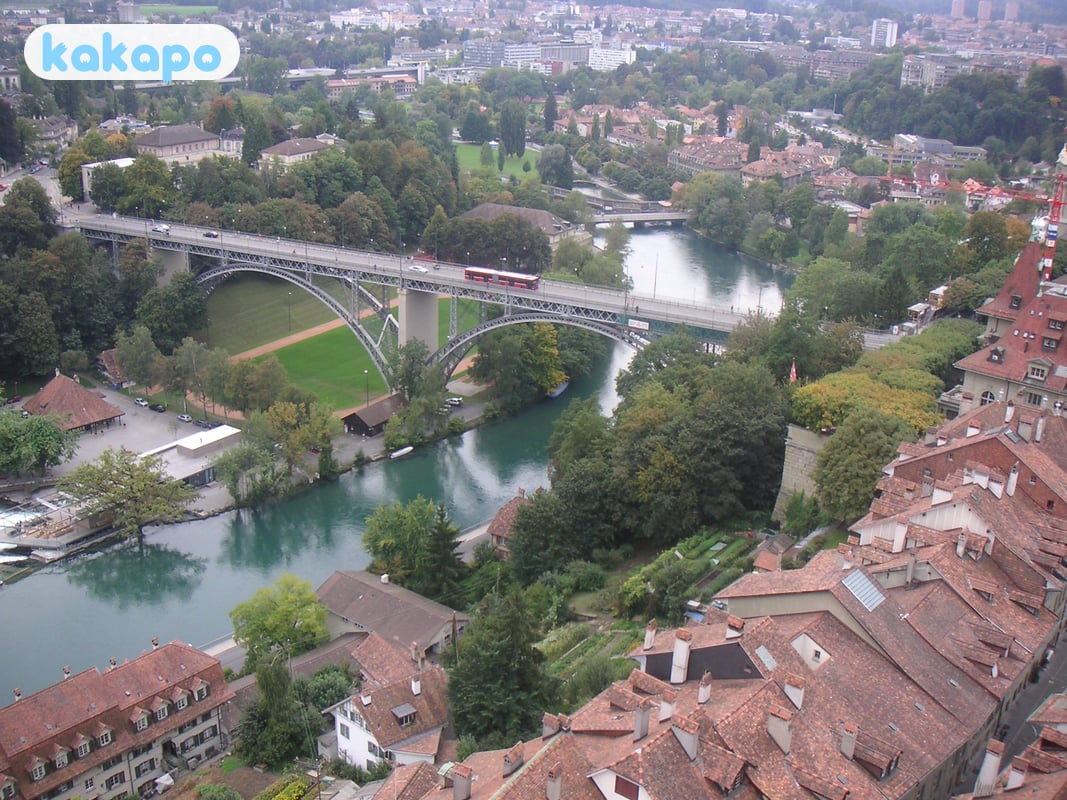
- The ritual: in summer, Bernese commuters and after-work groups float the Aare from Marzili to Bärenpark — about 2 km of fast turquoise current through the heart of the city. They use a wasserdicht waterproof bag (Aare-Tasche) for clothes and exit at the wooden ladders.
- The water: glacier-fed, 16-22°C in summer. The current is genuinely strong — 2-3 m/s in the centre channel.
- The actual risk: tourists copy locals without understanding the exit points. Miss the ladder + you're swept past the city; the next exits are kilometres downstream and increasingly difficult.
- Drownings: 2-5 per Bern-area summer; tourists over-represented.
- Rules: never enter alone, never after a drink, only enter at Marzili or higher when you've confirmed the exit ladders, wear a buoy/swim bag for visibility.
- The Marzili lido: free public bath at the river; safe entry/exit area for first-timers. Spend a session there before you commit to a float.
- If you don't swim well: don't float. The Marzili pool itself is fine.
BärenPark — the actual bears
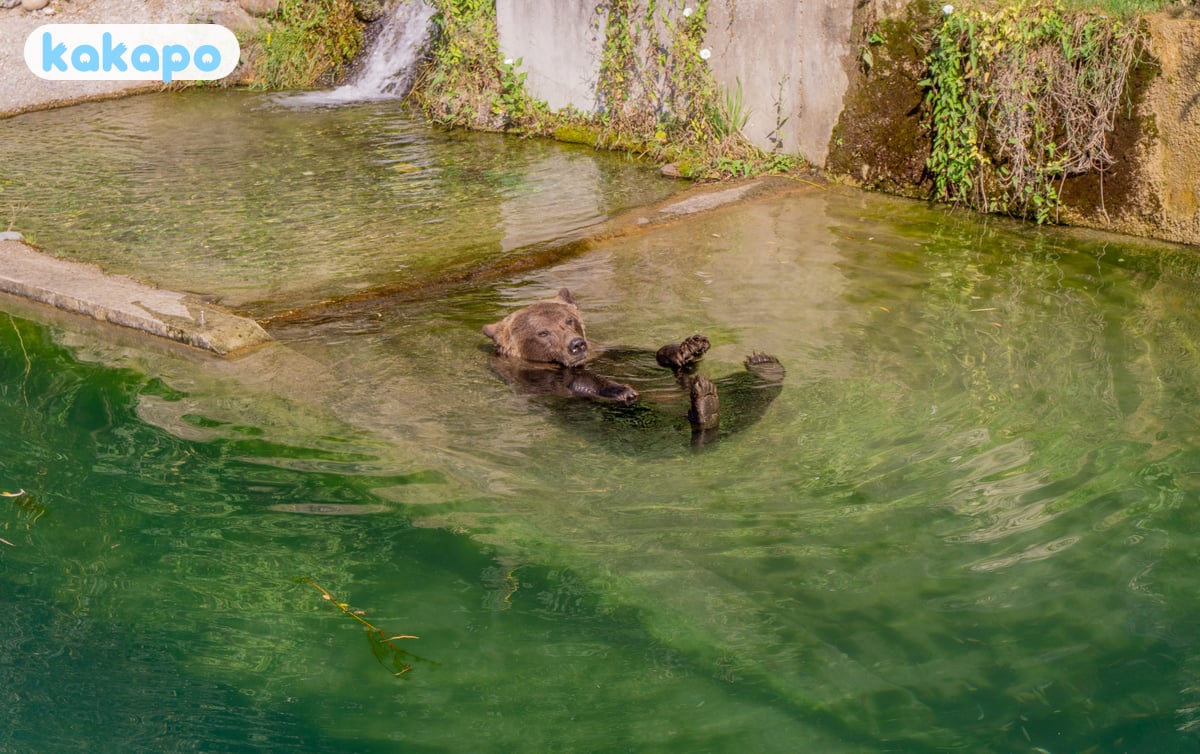
- What it is: a free public bear enclosure built into the Aare riverbank by Nydeggbrücke. Bern's heraldic mascot since 1513.
- The bears: 3 brown bears, full-sized, in a 6,000 m² hillside enclosure with river access.
- Fencing: serious. The bears can't get out; people occasionally try to get in (don't).
- Children: the upper viewing platform has standard waist-high railings; the lower river-side path has good fencing too. Hold hands with toddlers near the upper-platform glass.
- Don't feed: signs in 12 languages; €200+ fines.
- Best viewing time: early morning + late afternoon when bears are active.
- Hibernation: bears sleep through winter; you can still see the enclosure.
Old Town arcades + winter ice

- The Lauben: 6 km of covered sandstone arcades along the Old Town main streets. UNESCO. Shops underneath; first-floor entrances above.
- The cobble surface: sandstone setts in places, granite in others. Slick in rain.
- Winter ice: the arcades stay drier than the open street, but the joints between arcade-end and open square get glassy. Falls are the most common winter injury locals see in tourists.
- Footwear: rubber-soled boots with grip.
- Sledging: Bern has free public sledge runs in nearby Gurten + the suburbs. Real fun.
- Pickpockets: extremely low. Don't drop your guard at the train station, but otherwise zero issue.
Münster Tower + Zytglogge

- Münster (Cathedral): free entry; CHF 5 for the tower. 312 stone steps, narrow spiral, no handrail in places. Tallest church tower in Switzerland.
- Not for: serious knee problems, claustrophobia, fear of heights. Two-way traffic on a single spiral makes squeezes inevitable.
- Zytglogge clock tower: book-only paid tour CHF 20; the medieval clockwork performs the moving figures every hour outside (free).
- Zytglogge demonstration: 4 minutes before each hour; arrive 6 min before.
- Children: the Münster tower is best for ages 7+; the Zytglogge tour for ages 9+.
Rosengarten viewpoint + walks
- Rosengarten: rose garden + restaurant on the hill above the BärenPark. Best photographic view of the Old Town.
- Walking up: 12 min on stairs from the Bärenpark; bus 10 stops at Rosengarten for the lazy.
- Gurten: the local hill at 858 m. Funicular SBB-included with the Swiss Travel Pass; CHF 12.40 round trip otherwise. Tobogganing in winter, walking in summer.
- Aare loop walk: 4 km loop along both riverbanks; flat, scenic, perfectly safe day or evening.
- Solo women: comfortable at any hour anywhere in central Bern.
Trams, trains, the airport, and Swiss prices

- Bernmobil: tram + bus. Single CHF 4.60 (zone 100/101); 24h CHF 9.80.
- Bern Airport (BRN): tiny. Most fly into Zurich (1h by train) or Geneva (2h by train).
- Trains: SBB Bern ↔ Zurich 56 min, Geneva 1h45m, Lucerne 1h, Interlaken 50 min.
- Currency: CHF. Cards universal.
- Coffee: CHF 4.50-6.
- Casual lunch: CHF 22-35.
- Dinner: CHF 50-90/person midrange.
- Tap water: free at 100+ public fountains scattered through the Old Town. Drinkable.
- Tipping: not required.
Neighbourhood-by-neighbourhood breakdown

- Altstadt (UNESCO Old Town) — 6 kilometres of arcaded sandstone (Lauben) covering the medieval centre, wrapped on three sides by the Aare bend. Three parallel main streets — Marktgasse, Kramgasse and Gerechtigkeitsgasse — run from Bahnhof to Nydeggbrücke, each lined with shops at street level and apartments above. The Zytglogge clock tower is the visual midpoint. UNESCO-listed since 1983.
- The Aare river — glacier-fed turquoise water that wraps the Old Town on three sides. The Marzili lido (free public bath at the southern bend) is the safe-entry beach for first-timers; the Aare float ritual runs 2 km downstream from Marzili to Bärenpark with exit ladders along the way. Current 2-3 m/s in the centre channel; 2-5 drownings each Bern summer, tourists overrepresented. Read the swimming caveats in the dedicated section above before entering.
- Marzili pools and lido — the free public bathing area on the Aare south of the centre, where Bernese commute by floating down the river after work. Showers, lockers, lawn, café. Entry free. The right place for first-timers to understand the river before committing to the full float.
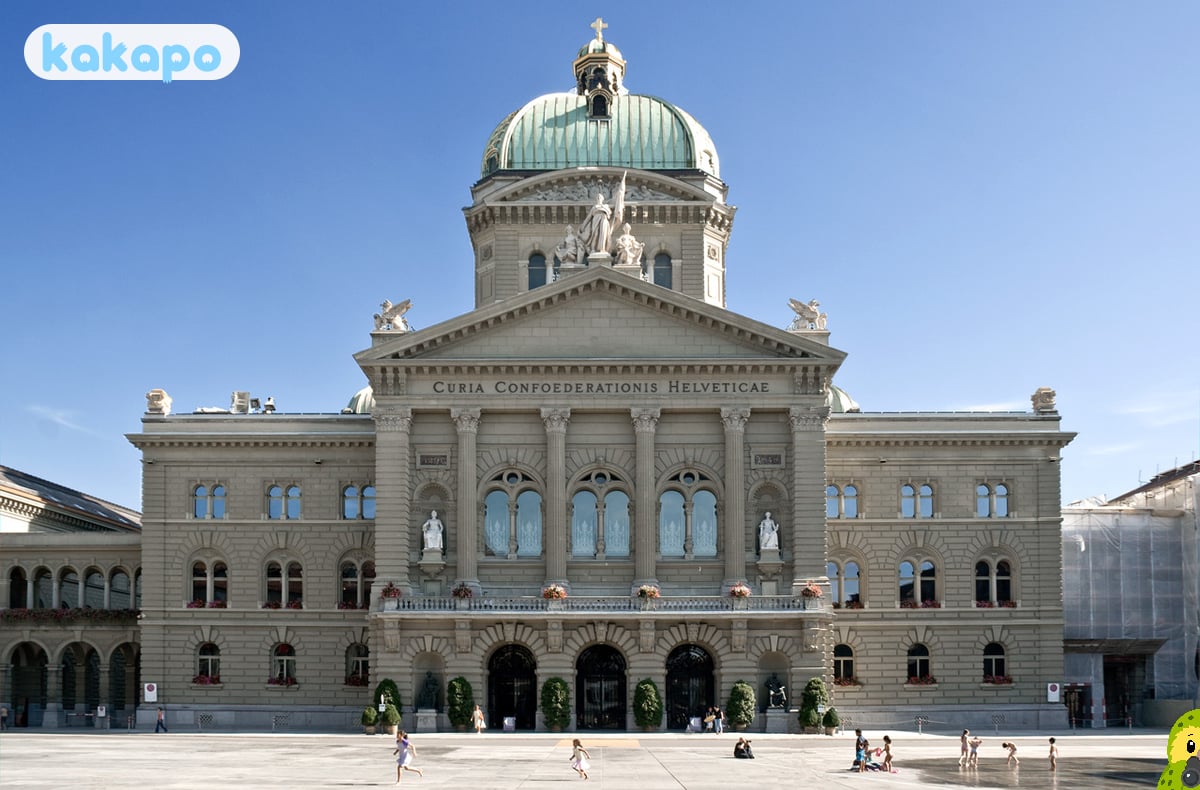
- Bundeshaus quarter — the federal parliament building (Switzerland's seat of government) dominates the south edge of the Old Town on Bundesplatz. Free tours when parliament is not in session (registration required). Bundesplatz hosts a fountain display in summer and the Christmas market in winter; entirely safe and family-busy.
- BärenPark (Bear Park) — the open-air bear enclosure built into the Aare riverbank at Nydeggbrücke. Three live brown bears, Bern's heraldic mascots since 1513, in a 6,000m² hillside enclosure with river access. Free; serious fencing; €200+ fines for feeding. Hibernation in winter. Best viewing early morning or late afternoon.
- Rosengarten — rose garden and restaurant on the hillside above the Bear Park, with the best photographic view of the Old Town from above. 12 minutes on stairs from Bärenpark; bus 10 stops at Rosengarten for the lazy.
- SBB to Zurich, Geneva, Lucerne, Interlaken — Bern Hauptbahnhof is at the western edge of the Old Town. ICE/IC trains: Zurich 56 minutes (CHF 51 second class), Geneva 1h45m (CHF 55), Lucerne 1h (CHF 39), Interlaken 50 minutes (CHF 30), Basel 55 minutes (CHF 41). No advance booking needed; trains every 30 minutes at peak.
- UNESCO Old Town caveats — the 6 km of arcades stay drier than open streets but the joints between arcade-end and open square get glassy in winter ice. Falls are the most common winter tourist injury. Rubber-soled boots with real grip; the cobble-and-arcade combination is unforgiving in any precipitation.
- Gurten and the local hills — Gurten is the local hill at 858m south-east of the centre. Funicular from Wabern (CHF 12.40 round-trip, free with Swiss Travel Pass) reaches a summit park with restaurants, tobogganing in winter and views as far as the Bernese Oberland in clear weather.
- Bern Airport (BRN) vs Zurich/Geneva — BRN is tiny with limited European routes; most visitors fly into Zurich (ZRH, 1 hour by SBB) or Geneva (GVA, 1h45m). Both airports have direct rail to Bern Hauptbahnhof; no transfers needed.
If it's your first time visiting
- Best arrival: SBB rail directly from Zurich Airport (ZRH) to Bern Hauptbahnhof in 1h12m (CHF 51 second class, every 30 minutes), or from Geneva Airport (GVA) in 1h45m (CHF 55). Both train stations have direct platform access from baggage claim. From Bern HB, the Old Town is a 5-minute walk down Spitalgasse. Skip Bern Airport (BRN) unless you have a specific direct flight; international connections via Zurich are usually faster.
- Best neighbourhood for your first night: a hotel along the Lauben arcades or just off them — Hotel Schweizerhof (CHF 350+), Hotel Bellevue Palace (CHF 400+ with Aare view), Hotel Bristol (CHF 200-280), Hotel Allegro (CHF 180-250). Bern is small enough that "central" means walking everywhere; skip the suburb hotels unless price-driven.
- Float the Aare only with caveats — the river ritual is one of Europe's great urban experiences but the current is 2-3 m/s and missing the exit ladder means being swept past the city. Spend a session at the free Marzili lido first to understand the exits. Never enter alone, never after drinks, only with a waterproof Aare-Tasche (CHF 30-50 at any Bern outdoor shop) for your clothes and a swim-buoy for visibility. If you're not a strong swimmer, don't float — just enjoy the Marzili pool.
- Münster tower climb and Zytglogge — Münster tower CHF 5 for the 312-step spiral climb (no lift; two-way traffic on a single spiral; not for claustrophobia or knee issues). Zytglogge clockwork display free every hour outside (arrive 6 minutes before); the paid interior tour is CHF 20 by booking only.
- BärenPark + Rosengarten as a morning loop — walk Old Town → Nydeggbrücke → Bear Park (free) → 12-minute stair climb to Rosengarten for the panoramic photograph → café lunch at Rosengarten Restaurant. About 2.5 hours total.
- Food worth seeking out: Restaurant Kornhauskeller (the vaulted grain-cellar restaurant, CHF 50-90), Della Casa (traditional Swiss, CHF 40-70 with Bernese platter as the headline), Lötschberg AOC (alpine specialties, CHF 35-55), Confiserie Tschirren for the famous truffles, the Markt market hall for casual lunch. Coffee at Adrianos or Einstein Kaffee (both within 5 minutes of the Zytglogge).
- Swiss-price reality check — coffee CHF 4.50-6, casual lunch CHF 22-35, midrange dinner CHF 50-90/person. The 100+ public drinking fountains scattered through the Old Town are excellent and free (most fed by spring water, many historical sculptural pieces); the Swiss tap-water standard is among Europe's strictest. Refilling your bottle from fountains is part of the experience.
- Day-trip strategy via SBB — Bern is the heart of the Swiss rail network. 56 minutes to Zurich (or vice versa for a Zurich-based Bern day-trip), 50 minutes to Interlaken (gateway to Jungfrau and the Bernese Oberland), 1 hour to Lucerne (lake and Pilatus), 1h45m to Geneva, 55 minutes to Basel. None requires advance booking; the Swiss Travel Pass (4-day CHF 244) pays for itself on three day-trips.
- Common rookie mistakes: floating the Aare on day 1 with no Marzili lido orientation (missing the exit ladders, swept downstream); climbing the Münster tower with bad knees (312 spiral steps, two-way traffic); paying card terminals in your home currency rather than CHF (DCC adds 3-7%); withdrawing from Euronet ATMs (use UBS, PostFinance, Credit Suisse branch ATMs); under-dressing for winter Old Town ice (the cobble-arcade joints are genuinely treacherous); and forgetting CHF is not euros (Switzerland is in Schengen but not the EU).
Practical info — emergency numbers
- European emergency: 112.
- Police: 117.
- Ambulance: 144.
- Air rescue (REGA): 1414 (in CH).
- Inselspital Bern: +41 31 632 21 11.
Bring: rubber-soled boots in winter, sturdy shoes year-round, swimwear + waterproof bag if you intend to float the Aare, layered clothes, a contactless card, and travel insurance with Swiss heli-rescue cover for any alpine plans.
Frequently asked questions
Is Bern safe to visit in 2026?
Yes — exceptionally. Bern scores 92/100 and is among Europe's safest capitals. Switzerland sits at Level 1 on the US State Department advisory (the lowest level) and the UK FCDO carries no specific warning. Violent crime against tourists is essentially zero. The realistic concerns are particular to Bern: the Aare river swim is a legitimate local ritual that puts non-swimmers in real danger when copied poorly (2-5 drownings per Bern-area summer, tourists overrepresented); the cobbled arcaded UNESCO Old Town gets glassy in winter ice; and the Swiss-capital cost baseline catches travellers out (coffee CHF 4.50-6, dinner CHF 50-90).
Is Bern safe at night?
Yes — entirely. The Old Town arcades, the Bundeshaus quarter, the Aare loop and the Rosengarten viewpoint are completely safe at any hour. Bern is a quiet medieval town in feel despite being the federal capital — population is only ~135,000 and the centre empties early. Solo women walk anywhere at any hour. The only meaningful caution is winter ice on the cobble joints between arcades and open squares (rubber-soled boots) and standard awareness at Bern HB train station late after the last trains.
Is Bern safe for solo female travellers?
Yes — among the safest cities in the world for solo women. The compact medieval centre, near-zero crime base rate, and reserved Swiss street culture make it genuinely worry-free. Catcalling is essentially absent. Solo women routinely float the Aare with locals (with safety caveats), use the Marzili lido alone, and walk back from Old Town restaurants late. The only Bern-specific cautions are not crime — they're the Aare current, the Münster tower's two-way single-spiral squeeze, and winter ice.
Can you drink tap water in Bern?
Yes — emphatically. Bern's tap water is excellent and the city has over 100 public drinking fountains scattered through the Old Town (many fed by spring water), most of them historical sculptural pieces in their own right. Locals fill bottles routinely. Restaurants serve tap water free on request. Switzerland's standards are among the strictest in Europe. Carry a refillable bottle — the fountains are part of the experience.
What's the biggest scam to avoid in Bern?
Honestly, organised scams in Bern are rare — Switzerland's prosperity and low crime base rate make it a poor scam environment. The realistic risks are commercial: DCC at card terminals (always pay in CHF, never your home currency, adds 3-7%); Bern HB station-area cafés charging tourist prices for routine items; and unofficial 'Swiss watch' deals from anyone who isn't a registered retailer. ATM withdrawal fees from non-bank Euronet machines run high — use UBS, Credit Suisse / UBS Switzerland or PostFinance branch ATMs.
Is it safe to float the Aare river through Bern?
Only with real swimming ability and local guidance. The Aare ritual — floating glacier-fed turquoise water 2 km through the centre from Marzili to Bärenpark — is one of Europe's great urban experiences for locals. But the current runs 2-3 m/s in the centre channel, the water is 16-22°C even in summer, and missing the wooden exit ladders means being swept past the city with increasingly difficult exits kilometres downstream. Rules: never enter alone, never after drinks, only enter at Marzili or higher with a waterproof Aare-Tasche bag for clothes and a buoy for visibility, and spend a session at the free Marzili lido first to understand exits. If you're not a strong swimmer, don't float — just enjoy the Marzili pool.
Sources
Run a business in Bern?
Show visitors your Bern business is a safe choice. The free Verified by Kakapo badge puts Bern's live safety score on your website, links back to your verified page, and updates itself. No cost.
Get the free badge →