


Is Bangkok Yai, Thailand Safe? A 2026 Travel Safety Guide
Bangkok Yai is a Thonburi-side district within Bangkok — see our Bangkok guide. Honest concerns: navigating klong neighbourhoods, motorbike-taxi crashes, limited English, and the Chao Phraya river crossing.

Bangkok Yai is a district within Bangkok — read our Bangkok guide first. It sits on the west (Thonburi) bank of the Chao Phraya, opposite the Grand Palace. This is the older, residential, working-class Bangkok — narrow sois, klong (canal) neighbourhoods, traditional teak houses, almost no high-rise. Wat Arun (Temple of Dawn) is on the riverfront just north of the district line; Wat Kalayanamit is inside it.
Crime against tourists is low — almost zero, because almost no tourists come here. The realistic concerns are practical: very limited English, no BTS/MRT directly serving the core district (the MRT Blue Line extension reaches the edges at Bang Phai and Itsaraphap), motorbike taxis are the local mode and crashes happen, and the klong-side walkways are uneven and unlit at night.
Thailand sits at Level 2 (US State Department). Air quality is Bangkok-baseline (PM2.5 spikes Dec-March). The neighbourhood character is genuinely traditional — visiting feels like a different city from Sukhumvit.
| Night safety | 64/100 |
|---|---|
| Scam / petty-crime risk | Medium |
| Violent crime (tourists) | Low |
| Most common scams | gem-shop scam; phone-snatch from motorbike |
| Safer neighbourhoods | Bangkok Yai, Khlong Bang Luang, Wang Lang |
| Data sources cited | 3 |
| Last verified |
What the score means — 76/100
- Personal safety (82) — high; tourist-targeted crime essentially nil; petty theft baseline.
- Transport (76) — MRT Blue Line at edges; Chao Phraya Express Boat at Tha Wat Kalyanamitr; motorbike-taxi the local norm.
- Healthcare (84) — Siriraj Hospital across river is one of Thailand's largest teaching hospitals.
- Air quality (70) — Bangkok-baseline PM2.5.
What Bangkok Yai is actually like
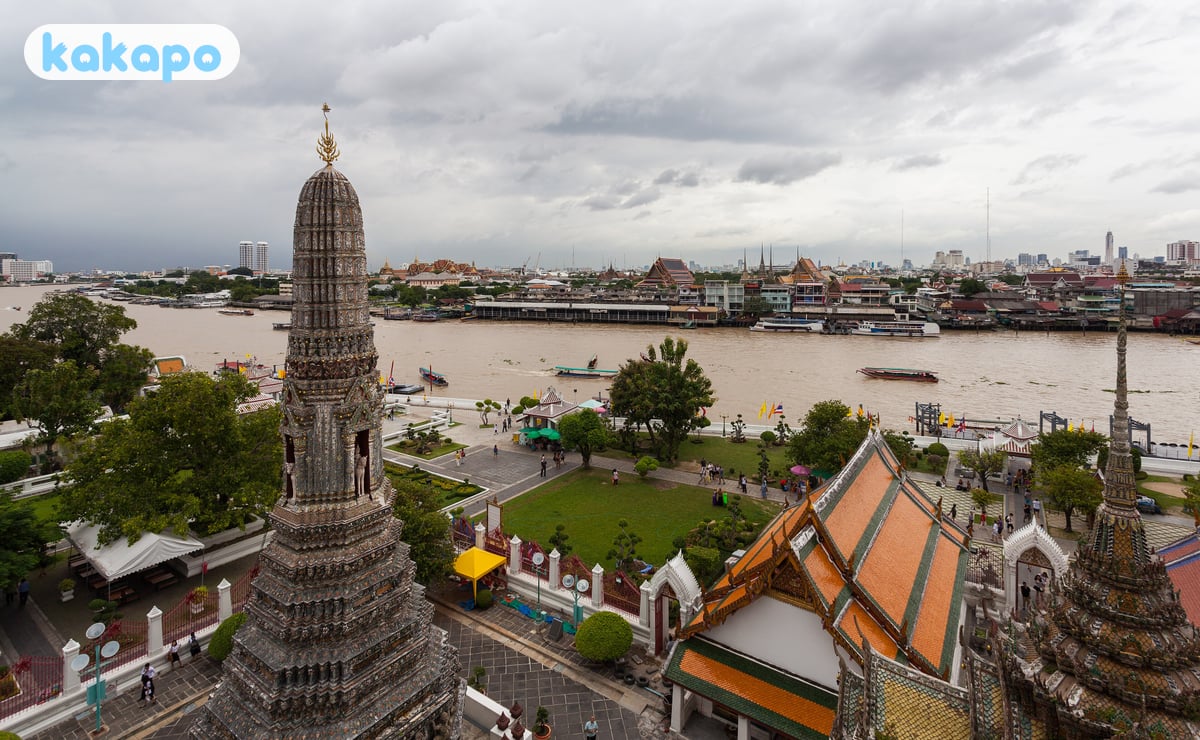
Bangkok Yai feels like Bangkok before tourism. Narrow sois between Khlong Bangkok Yai and Khlong Bangkok Noi; small markets; teak shophouses; temple compounds (Wat Kalayanamit, Wat Hong Rattanaram); cats sleeping on motorbikes; muezzin from the Kudi Khao mosque (the district has a small Cham-Muslim community dating to Ayutthaya-era resettlement).
- Tourist sights: Wat Kalayanamit (giant Buddha), Wat Hong Rattanaram, Princess Mother Memorial Park, Santa Cruz Church (Portuguese-era), longtail-boat klong tours from the river.
- Adjacent: Wat Arun (Temple of Dawn) just north; Wang Lang market (street food) further north; the Grand Palace + Wat Pho across the river.
Getting there — boat is the answer
- Cross-river ferry from Tha Tien: 5 baht to the Wat Arun side; from there 10-min walk or motorbike-taxi to Bangkok Yai core.
- Chao Phraya Express Boat: orange flag, 16 baht; stops at Tha Wat Kalyanamitr.
- MRT Blue Line: Bang Phai and Itsaraphap stations on the district fringe; ~10-15 min walk to klong-side neighbourhoods.
- Grab: works but slow on Thonburi-side narrow streets; drivers may decline very-narrow soi addresses.
- Motorbike taxi: orange-vest drivers at every soi mouth; 20-50 baht for short trips. Helmet variable.
- Klong longtail tours: pre-book via hotel or Klook (1,500-2,500 baht private hire); avoid Sathorn-Pier touts.
Practical concerns — language, klong walkways, motorbikes
- English: very limited outside tourist-facing temples. Use Google Translate. Have your destination written in Thai.
- Klong-side paths: narrow concrete walkways with low/no railings; uneven; poorly lit at night. Don't walk drunk; closed-toe shoes.
- Motorbike-taxi crashes: standard Bangkok risk. Helmet if available; sit upright; don't text.
- Stray dogs: residential area; some packs. Don't approach.
- Snakes in klongs: rare but possible; water monitor lizards common (harmless but startling).
- Floods: low-lying; monsoon (May-Oct) afternoon flash floods can submerge soi for 1-2 hours.
- Modesty at temples: covered shoulders and knees; remove shoes before entering halls.
Bangkok Yai vs Bangkok's other districts — choosing your base
Bangkok Yai (literally "great Bangkok") is one of the 50 districts on the Thonburi (west) side of the Chao Phraya river. Most international tourists stay on the east side (Sukhumvit, Silom, or around the Grand Palace in Rattanakosin) and visit Thonburi as a day-trip; staying overnight in Bangkok Yai itself is a more local-life choice.
- What's actually in Bangkok Yai: Wat Arun (the Temple of Dawn, technically across the river border in Wat Arun's own subdistrict), the Khlong Bang Luang artist village, the Bangkok Yai canal community, a quieter, more residential rhythm than east-side Bangkok.
- Wat Arun: the iconic spired temple. Best photographed from the east-bank Tha Tien pier at sunset. Cross-river ferry from Tha Tien to Wat Arun pier costs THB 5; the temple itself THB 100 entry.
- Khlong Bang Luang artist village: a small community of converted shophouses along the canal, mostly arts + crafts. Reachable by longtail-boat tour or BTS to Bang Wa + taxi.
- Where to stay nearby: most international visitors choose east-bank Bangkok for transit + nightlife; if you specifically want Thonburi quiet, the Avani+ Riverside or The Peninsula are the higher-end Thonburi-side hotels.
- Getting around: BTS Silom line crosses the river at Saphan Taksin; MRT extension lines now reach Bang Wa + Bang Khae in the south Thonburi area. Grab is the cleanest taxi option.
Bangkok-wide scams — apply equally here
- "Temple closed today, come with me" tuk-tuk scam: Bangkok's signature scam. A friendly local or tuk-tuk driver tells you Wat Arun or the Grand Palace is closed for a "special ceremony" and offers a cheap city tour ending at a gem or tailor shop with high-pressure sales. The temples are not closed; politely ignore and walk in.
- Gem-shop scam: the classic, well-documented for 30+ years. "Today is special; sapphires are tax-free." The gems are glass or worthless cuts. Never buy gems in Thailand from a shop a tuk-tuk driver took you to.
- Tuk-tuk vs taxi pricing: tuk-tuks charge tourist rates 2-4× metered taxi rates for the same distance. Use Grab or insist on the metered taxi (taxi-meter; "meter please" in English works).
- Bar-girl tab inflation: same Sukhumvit/Patpong pattern. Don't follow strangers into venues; pay per drink in unfamiliar bars.
- Drink-spiking: documented at some Patpong + Khao San Road venues. Hold your own drink.
- "Discount Grand Palace tour" leaflet at BTS stations: standard tour-tout pattern. The Grand Palace ticket office accepts walk-ups; THB 500 official entry.
- Phone-snatch from motorbike: real Bangkok pattern. Don't walk talking on a phone near the kerb.
- ATM skimming + freestanding ATM fees: prefer bank-branch ATMs (Bangkok Bank, Kasikorn, SCB). The standalone ATMs charge THB 220 per foreign-card withdrawal.
Money, food, emergency numbers
- Currency: Thai baht (THB). $1 ≈ 35 baht.
- Cards: very limited — bring cash. ATMs at 7-Eleven and bank branches on Itsaraphap Road.
- Food: traditional Thonburi street food — kuay tiew rua (boat noodles), kanom krok at the morning markets, Muslim roti at Kudi Khao area. Wang Lang Market (north) for the bigger street-food scene.
- Tap water: not drinkable.
- Heat: 28-36°C; SPF50; hydrate.
- Emergency: 191 (police); 1669 (ambulance); 1155 (Tourist Police, English).
- Hospitals: Siriraj Hospital +66 2 419 7000 (across the river); Thonburi Hospital +66 2 487 2000.
Frequently asked questions
Is Bangkok Yai safe to visit in 2026?
Yes — Bangkok Yai scores 80/100 and crime against tourists is essentially nil because almost no tourists come here. This is the older Thai-residential Thonburi side of the Chao Phraya, opposite the Grand Palace, with narrow sois, klong canal neighbourhoods, traditional teak houses and almost no high-rise. The US State Department lists Thailand at Level 2. Realistic concerns are practical: very limited English outside tourist-facing temples (Wat Kalayanamit, Wat Hong Rattanaram), no BTS/MRT directly serving the core (MRT Blue Line reaches the edges at Bang Phai and Itsaraphap), klong-side walkways are uneven and unlit at night, and the chronic Dec-March PM2.5 from upcountry crop-burning.
Is Bangkok Yai safe at night?
Yes broadly — Bangkok Yai is quiet, residential, and locals know each other. But the klong-side concrete walkways have low or no railings, are uneven and poorly lit, so don't walk drunk after midnight and wear closed-toe shoes. Stray dog packs are present in residential sois; don't approach. Monsoon flash-flooding (May-October afternoons) can submerge sois for 1-2 hours. There's no nightlife district to look for — for that, take the cross-river ferry from Tha Wat Kalyanamitr (5-16 baht) to Tha Tien on the Rattanakosin side and you're walking distance to the Grand Palace area, or BTS/MRT to Sukhumvit and Silom. Police: 191; Tourist Police: 1155 (English).
What's the dominant scam to watch for from Bangkok Yai?
The same Bangkok-wide scams apply equally — the 'temple closed today, come with me' tuk-tuk routing to a gem or tailor shop is the headline (Wat Arun and the Grand Palace are not closed for 'special ceremonies' — they accept walk-ups, Grand Palace is THB 500 official entry). The gem-shop scam ('sapphires tax-free today') has been documented for 30+ years and the stones are glass — never buy gems in Thailand from a shop a tuk-tuk driver took you to. From Bangkok Yai, longtail klong tours are the local trap — Sathorn Pier touts quote 5,000-8,000 baht for what should be 1,500-2,500 baht. Pre-book via your hotel or Klook. Use Grab for taxis or insist on the metered taxi (say 'meter please'). Bank-branch ATMs (Bangkok Bank, Kasikorn, SCB) only — standalones charge THB 220 per foreign withdrawal.
Can you drink tap water in Bangkok Yai?
No — Bangkok tap water is not safe for visitors and Bangkok Yai is no exception (arguably worse here because the Thonburi side has older infrastructure). Bottled is universal and cheap (10-15 baht for 500ml from any 7-Eleven on Itsaraphap Road). Don't take ice in roadside boat-noodle (kuay tiew rua) stalls; the larger Wang Lang Market vendors and Siriraj Hospital food court use filtered ice. Don't swim or wade in the klongs — water monitor lizards are harmless but startling, and the water has agricultural and sewage runoff. The bigger health issue is heat (28-36°C, SPF50 essential) and motorbike-taxi crashes (helmet if available, sit upright, don't text).
How do I actually get to Bangkok Yai and is it worth visiting?
By boat — the cross-river ferry from Tha Tien (just south of the Grand Palace) costs 5 baht and drops you near Wat Arun, with the Bangkok Yai core a 10-minute walk or 20-50 baht motorbike-taxi south. The Chao Phraya Express Boat (orange flag, 16 baht) stops at Tha Wat Kalyanamitr inside the district. MRT Blue Line Bang Phai or Itsaraphap stations are ~10-15 minute walks to the klong neighbourhoods. Worth visiting if you want Bangkok-before-tourism atmosphere — Wat Kalayanamit's giant Buddha, the Khlong Bang Luang artist village, Santa Cruz Church from the Portuguese era, and a longtail klong tour (1,500-2,500 baht private hire pre-booked). Stay overnight only if you specifically want the local-life experience — most visitors day-trip from Sukhumvit or Rattanakosin.
Sources
Run a business in Bangkok Yai?
Show visitors your Bangkok Yai business is a safe choice. The free Verified by Kakapo badge puts Bangkok Yai's live safety score on your website, links back to your verified page, and updates itself. No cost.
Get the free badge →