
What happened
Seoul is under the most serious heat warning the city has ever received. On Monday 3 August 2026 the Korea Meteorological Administration issued a "severe" heat wave warning for parts of Seoul and neighbouring Gyeonggi province, and on Tuesday 4 August it extended that warning to the entire capital. It is the first time Seoul has been placed under a severe heat wave warning since the designation was created earlier this year, and the warning is triggered only when the maximum perceived temperature reaches at least 38C (100.4F), as NBC News reported.
The numbers behind the warning are unusual even for a Korean summer. Temperatures in central Seoul reached 38C at midday on Tuesday and were forecast to fall only to around 29C overnight, meaning very little relief after dark. On Sunday 2 August the southeastern city of Yangsan recorded 42.5C (108.5F), the highest temperature in 122 years of Korean weather observations, according to Deutsche Welle. The extreme heat was concentrated in the south of the country for most of July and has since pushed north over the capital region.
At least 16 people have died nationwide in heat-related incidents, a figure that rose to 19 by Tuesday, and the interior ministry recorded 2,025 heat-related illnesses between 15 May and 2 August. President Lee Jae Myung described the situation as a national disaster at a cabinet meeting on Tuesday and told officials to accelerate protective measures, saying the country needs "a fundamental overhaul of the national crisis system" because extreme weather is becoming normal. He also ordered inspections of the power grid as air conditioning demand climbs, which matters to visitors because a strained grid is what turns a hot week into a genuinely disruptive one.
Seoul city authorities have designated roughly 4,000 public facilities as official cooling centres and advised residents to stay indoors during the hottest hours, drink water regularly and check on elderly neighbours. Seoul proper has about 9.6 million residents and the wider metropolitan area more than 25 million, so this is one of the largest populations on earth currently under an extreme heat alert.
Why it matters for travelers
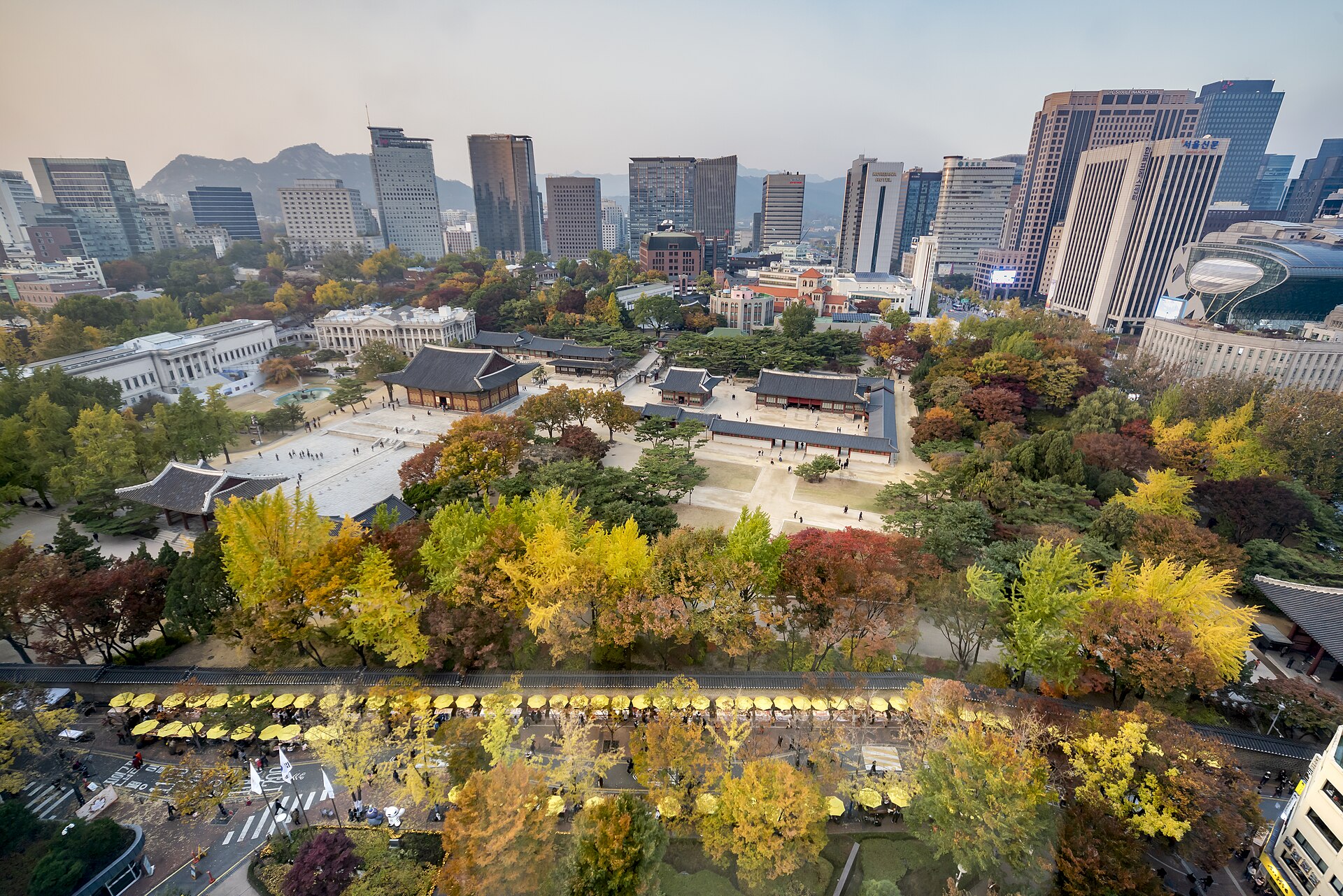
Nothing about this warning makes Seoul unsafe to visit in the ordinary sense. There is no unrest, no transport shutdown and no advisory telling foreign visitors to stay away. What has changed is the physical risk of a normal sightseeing day. Seoul is a city people walk, and the standard first-time itinerary is close to a worst case for heat exposure: Gyeongbokgung and Changdeokgung palaces are wide open stone courtyards with very little shade, Bukchon Hanok Village is a hill, the city wall trail and Inwangsan and Bukhansan hikes are exposed rock, and Myeongdong and Hongdae street food are outdoors in the early evening when the pavement is still radiating the day's heat.
Two features of this particular heat wave deserve attention. The first is the overnight temperature. When lows sit near 29C, the body does not get its usual recovery window, and heat strain accumulates across several days rather than resetting each night. Travelers who feel fine on day one often struggle on day three. Older visitors, anyone with a heart or respiratory condition, and people arriving jet lagged from a cooler climate are the ones who get caught out.
The second is accommodation. Most Seoul hotels are well air conditioned, but budget guesthouses, older hanok stays, hostel dorms and some short-term rentals are not, or run units that cannot hold a room below the high twenties during a night like this. If your booking does not explicitly confirm air conditioning in the room itself rather than only in common areas, this is the week to check.
Heat also changes the risk profile of things that are usually routine. Long queues for popular attractions, day trips to the DMZ that involve standing outdoors, baseball games, outdoor markets and any activity where you cannot easily step into shade all become more demanding than the itinerary suggests. Cycling along the Han River, which is one of the best things to do in Seoul, is genuinely hazardous in the middle of the day because there is almost no shade on the riverside paths.
What to do
Reshape the day around the heat rather than pushing through it. The practical Korean summer pattern is early start, long indoor middle, late evening out. Aim to be outdoors before about 10am and again after 7pm, and treat roughly 11am to 5pm as indoor time. This is not a compromise in Seoul, because the indoor options are genuinely good.
Use the underground city. Seoul has one of the largest air conditioned underground networks anywhere. The Coex Mall in Gangnam, the Myeongdong and Euljiro underground shopping arcades, Times Square in Yeongdeungpo, the Lotte and Shinsegae department stores and the connected subway concourses let you cross large parts of the city without surfacing. Museums are the other reliable option: the National Museum of Korea, the Seoul Museum of History, the War Memorial of Korea and the Leeum are all large, cool and worth several hours.
Take the subway, not the surface. Seoul Metro carriages and stations are air conditioned, and several lines have designated weak air conditioning cars if you find them too cold. Buses are air conditioned too but involve waiting at exposed stops. Walking between neighbourhoods, which is normally the nicest way to see the city, is the thing to cut back on. Taxis are cheap by international standards and worth it in the middle of the day.
Know where the cooling centres are. The roughly 4,000 designated facilities include community centres, senior centres, subway stations, banks and public buildings, and they are marked with a blue and white sign. Anyone can use them, including visitors. Convenience stores, which are everywhere and open late, are the informal version of the same thing.
Drink more than you think you need, and add salt. Water alone is not enough across several days of heavy sweating. Korean convenience stores stock Pocari Sweat and similar electrolyte drinks, salt tablets and ice bars for very little money. Cold barley tea is served free almost everywhere. Coffee and alcohol both work against you, and a long soju evening after a hot day is a common way visitors end up unwell.
Carry the cheap gear that actually works. A folding fan, a UV umbrella or parasol, a cooling towel you wet at a fountain, a wide brimmed hat and sunscreen are all sold in any Olive Young or Daiso branch for a few thousand won. Parasols are completely normal for all genders in Seoul and make a real difference on palace grounds.
Learn the warning signs. Heat exhaustion looks like heavy sweating, weakness, dizziness, nausea, headache and cool clammy skin, and it is your cue to get indoors, lie down and rehydrate. Heat stroke is a medical emergency: hot dry skin, a body temperature above about 40C, confusion, slurred speech, no sweating, collapse. Call 119 for an ambulance, which is the emergency number for both fire and medical response in Korea, and expect English support through the operator or the 1339 medical helpline. Seoul's hospital network is excellent and emergency care is fast, but travel insurance matters because foreign visitors pay for treatment up front.
Adjust specific plans. Postpone Bukhansan and Inwangsan hikes to a cooler stretch or start at dawn. Move Han River cycling to after sunset, when the parks are floodlit and full of locals doing exactly that. If you have a DMZ tour booked, confirm how much of it is outdoors. Nami Island, Everland and other day trips involve long outdoor stretches and are better saved for later in your trip if the forecast eases.
Watch the forecast rather than the headlines. Korean heat waves in August often break within a week, sometimes abruptly with a typhoon remnant or a monsoon band. The Korea Meteorological Administration publishes English forecasts and alert levels, and Naver Map or KakaoMap will show the current perceived temperature, which is the number the warning is based on and a better guide than the raw air temperature.
How this fits Seoul's wider safety picture
Seoul scores 89 out of 100 in Kakapo's safety assessment, which places it among the safest large cities in the world. Violent crime against visitors is rare, the transport system is safe at all hours, solo travel including solo female travel is straightforward, and the practical risks in an ordinary week are pickpocketing in crowded nightlife districts and the occasional taxi overcharge rather than anything more serious. That underlying picture has not changed this week.
What has changed is that the dominant risk to a visitor right now is environmental rather than criminal, and it is the kind of risk that responds almost entirely to planning. Heat illness is preventable in a way that most travel risks are not. Travelers who shift their hours, stay hydrated, use the city's indoor infrastructure and take the first symptoms seriously will have a good trip. Those who try to run a normal walking itinerary through a 38C afternoon are the ones who end up in an emergency room.
It is also worth keeping the event in proportion. South Korea's heat response system is well developed, the new warning tier exists precisely so that authorities can escalate messaging early, and cooling centres, public messaging and emergency services are all functioning normally. This is a country managing a severe heat wave competently, not a country in crisis.
The bottom line
Seoul is under its first ever severe heat wave warning, with daytime temperatures around 38C, overnight lows near 29C and no immediate break forecast. Travel to and around the city is unaffected and the city remains as safe as it usually is, but the schedule you planned probably needs rewriting. Move sightseeing to early morning and evening, spend the middle of the day underground or in museums, hydrate with electrolytes rather than water alone, confirm your room has working air conditioning, and know that 119 is the number if someone shows signs of heat stroke.
Cited sources
Reporting from the outlets below.
Frequently asked questions
Is Seoul safe to travel to right now?
South Korea's weather agency extended its new top tier heat wave warning to all of Seoul on 4 August, with midday temperatures near 38C and overnight lows around 29C. The city is open and safe, but a normal walking itinerary is not safe to run in the middle of the day. See Kakapo's live Seoul safety report for the up-to-date composite score, neighbourhood-by-neighbourhood breakdown, and per-source advisories from US State Dept, UK FCDO, Canadian government, and Australian Smartraveller.
What happened in Seoul?
Seoul under its first ever severe heat wave warning as South Korea's record heat turns deadly. South Korea's weather agency extended its new top tier heat wave warning to all of Seoul on 4 August, with midday temperatures near 38C and overnight lows around 29C. The city is open and safe, but a normal walking itinerary is not safe to run in the middle of the day. This is a advisory based on reporting from major travel-news outlets — see the cited sources below for the original coverage.
Should I cancel my trip to Seoul?
Most travel-safety events do not require cancelling a planned trip. Read the "What it means for travelers" section above for the specific guidance, check the live Seoul safety report for the current overall score, and consult your travel insurance for cancellation eligibility. Kakapo updates the Seoul safety profile as new advisories land.
Where can I find more travel safety news?
Kakapo publishes new travel-safety updates as events develop, sourced from BBC, Reuters, the Guardian, Al Jazeera, Deutsche Welle, France 24, US State Dept, and UK FCDO. Visit the live travel-news feed at kakapo.travel/travel-news for the latest.