
The wider Gulf has entered a tense stretch, and travelers with Dubai on their itinerary are understandably asking what it means for them. The short version: Dubai is not the flashpoint, the city is running normally, but the regional picture around it has changed enough that a little planning goes a long way.
What happened
Over the past two weeks the long-running standoff between the United States and Iran escalated sharply around the Strait of Hormuz, the narrow shipping lane at the mouth of the Gulf that carries a large share of the world's seaborne oil. The United States carried out repeated strikes on Iranian military targets, and Iran responded with missile and drone attacks aimed at several Gulf states and at commercial shipping in the strait.
Two United Arab Emirates tankers were hit by Iranian missiles in the southern part of the Strait of Hormuz while in Omani territorial waters, and Iran moved to close the strait to traffic for a period. War-risk insurance premiums for vessels transiting the area rose steeply, and some shipowners paused transits altogether.
The knock-on effects reached air travel. As Gulf News reported, several UAE carriers suspended selected routes to and from Kuwait amid the tensions, with Emirates cancelling multiple Dubai to Kuwait services, and Etihad and Air Arabia trimming Abu Dhabi and Sharjah flights to Kuwait. The United States, United Kingdom and Canada all updated their travel advisories for a cluster of Gulf destinations, including the UAE, Kuwait, Bahrain, Saudi Arabia, Oman, Qatar and Jordan.
It is worth being precise about what these advisory updates are and are not. For the UAE they generally reflect a call for increased caution and awareness rather than a recommendation against travel. That is a meaningful signal, but it is a long way from an evacuation notice.
Why it matters for travelers
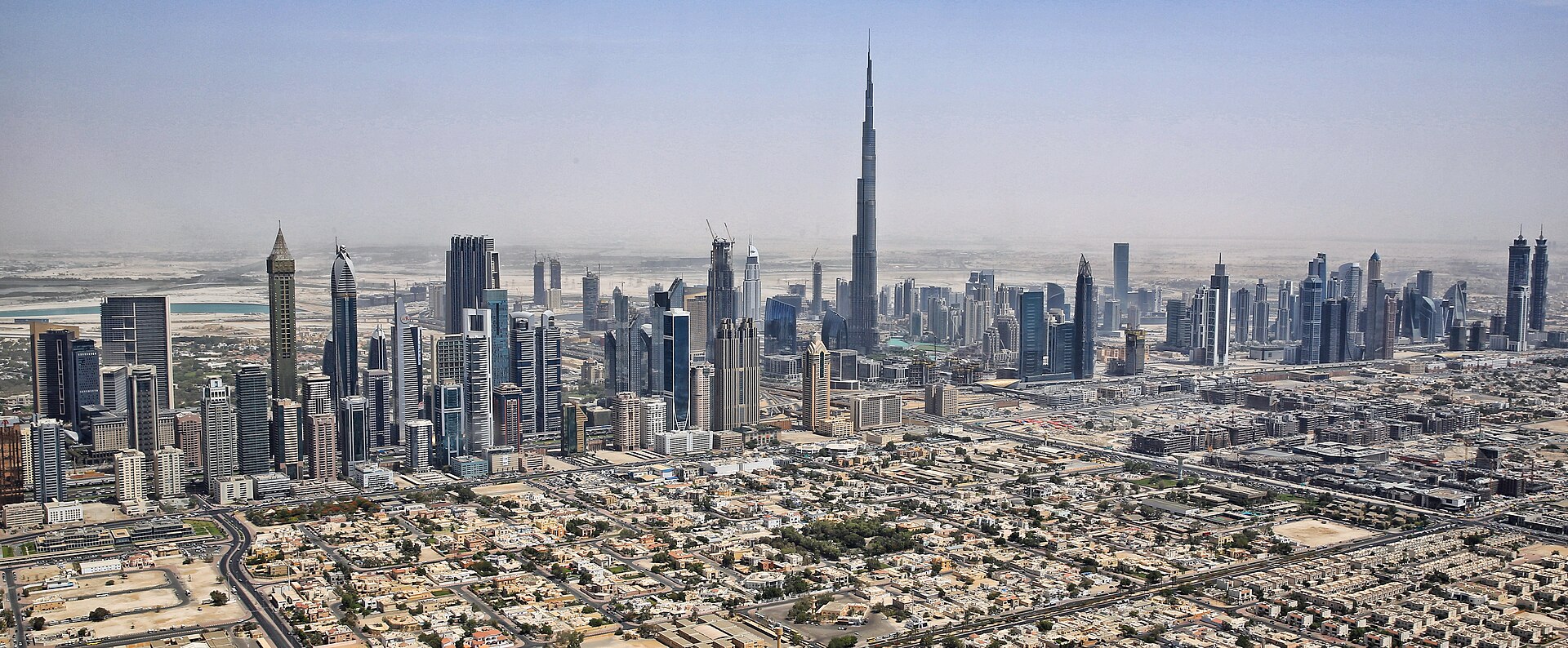
Dubai sits well inside the UAE and away from the strait itself, and daily life in the city has continued without disruption. The airport is open, hotels and malls are operating normally, and there has been no attack on Dubai. The practical risks for a visitor are indirect rather than direct.
The most likely way this affects a Dubai trip is through the air. When carriers reroute around contested airspace or pause certain regional legs, the result can be longer flight times, occasional schedule changes, and knock-on delays even on routes that are not themselves cancelled. If your journey connects through the Gulf or includes a regional hop to somewhere like Kuwait, Bahrain or Qatar, that leg is more exposed to change than a direct long-haul into Dubai.
The second consideration is simply that the situation is fluid. A regional conflict can de-escalate or intensify quickly, and the advisory picture can move with it. That is a reason to stay informed, not a reason to cancel a trip to a city that remains calm.
What to do
Keep your plans, but make them flexible and informed.
Check your government's official travel advisory for the UAE before you book and again in the days before you fly, rather than relying on headlines. Advisories are updated as the situation changes and are the most reliable read on whether anything has shifted for the UAE specifically.
Favor direct flights into Dubai International (DXB) or Al Maktoum (DWC) over itineraries that connect through other Gulf hubs, and if you are booking now, choose fares that allow changes. Confirm your flight status with the airline in the 24 hours before departure, since the disruptions so far have been concentrated on specific regional routes rather than on Dubai long-haul.
Buy or review travel insurance and check that it covers trip disruption and delay, since the most probable inconvenience here is schedule-related. Register with your embassy's traveler notification service if it offers one, so you receive direct updates.
Within Dubai, no special precautions are needed beyond the ordinary. Stick to the excellent Dubai Metro and licensed taxis or ride-hailing for getting around, keep your documents and a charged phone on you, and go about the usual tourist areas of Downtown, Dubai Marina, Deira and Jumeirah as normal. There is no area of the city that has become unsafe because of the regional situation.
Avoid any spontaneous plans to take a boat trip out toward the strait or to travel overland toward border areas while tensions are high, and skip regional side-trips to more exposed neighbors unless you have confirmed they are running normally.
It also helps to understand what the closure of the Strait of Hormuz does and does not mean for a tourist. The strait is primarily a shipping and energy story. When it is closed or contested, the immediate effect is on oil tankers, cargo vessels and the insurance market that underwrites them, not on the daily experience of a visitor sitting by a hotel pool in Dubai. The travel consequences that reach tourists are downstream, mainly in aviation, where airlines adjust routes and schedules around the airspace and any diverted air traffic. Keeping your itinerary simple and your flights direct is the single most effective way to insulate a Dubai trip from that turbulence.
Dubai's wider safety picture
None of this changes the underlying fact that Dubai is one of the safest major cities in the world for visitors. Street crime is very low, policing is highly visible, and the tourist infrastructure is polished and reliable. Solo travelers, families and women travelers generally report feeling very secure moving around the city at all hours.
What has changed is the neighborhood, not the house. A serious conflict on the Gulf's waterways raises the regional threat level and brings the practical friction of advisories and flight changes, which is why we have nudged the score down modestly rather than left it untouched. If and when the strait reopens fully and advisories ease, that adjustment should reverse. For now, a trip to Dubai remains reasonable for most travelers who plan with flexibility, watch the official advisories, and keep their regional connections to a minimum.
Cited sources
Reporting from the outlets below.
-
1
Gulfnews UAE Residents Update: New US-Iran Strikes, Strait of Hormuz Ship Fire, Flight Cancellations and Travel Advisories (Gulf News)
-
2
Al Jazeera Iran attacks five Gulf nations, shuts Hormuz after US bombing (Al Jazeera)
-
3
Cnbc US targets Iranian military assets as Tehran hits Gulf states (CNBC)
Frequently asked questions
Is Dubai safe to travel to right now?
A US-Iran confrontation centered on the Strait of Hormuz has brought tanker attacks, scattered flight cancellations and updated Western travel advisories across the Gulf region. Dubai itself remains calm and fully operational, but travelers should keep an eye on official advisories and build some flexibility into flights. See Kakapo's live Dubai safety report for the up-to-date composite score, neighbourhood-by-neighbourhood breakdown, and per-source advisories from US State Dept, UK FCDO, Canadian government, and Australian Smartraveller.
What happened in Dubai?
Dubai stays open and calm as US-Iran tensions unsettle the wider Gulf. A US-Iran confrontation centered on the Strait of Hormuz has brought tanker attacks, scattered flight cancellations and updated Western travel advisories across the Gulf region. Dubai itself remains calm and fully operational, but travelers should keep an eye on official advisories and build some flexibility into flights. This is a advisory based on reporting from major travel-news outlets — see the cited sources below for the original coverage.
Should I cancel my trip to Dubai?
Most travel-safety events do not require cancelling a planned trip. Read the "What it means for travelers" section above for the specific guidance, check the live Dubai safety report for the current overall score, and consult your travel insurance for cancellation eligibility. Kakapo updates the Dubai safety profile as new advisories land.
Where can I find more travel safety news?
Kakapo publishes new travel-safety updates as events develop, sourced from BBC, Reuters, the Guardian, Al Jazeera, Deutsche Welle, France 24, US State Dept, and UK FCDO. Visit the live travel-news feed at kakapo.travel/travel-news for the latest.